
In This Article

Sarah runs a consulting firm in Denver. Three months ago, she hired a “marketing expert” who promised to “transform her digital presence.” The expert delivered: a new website, daily LinkedIn posts, an email sequence, and a content calendar.
Her inbox filled with notifications. Her analytics showed activity.
Her bank account showed… nothing.
When I asked Sarah what problem her marketing was supposed to solve, she paused. “Get more clients,” she said. When I asked who those clients were, she said “business owners.” When I asked what those business owners were trying to fix when they hired her, she didn’t have an answer.
Sarah isn’t alone.
According to Constant Contact’s 2025 Small Business Now report, only 18% of small businesses feel “very confident” in their marketing — down from 27% in 2024. Meanwhile, LocaliQ’s research shows 45% of small businesses say getting new leads and customers will be “challenging” in 2025.
Here’s what nobody talks about: businesses are spending more on marketing but trusting it less.
This isn’t a tactics problem. It’s a thinking problem.
If any of these are true for you:
• You’re getting traffic but no consistent sales
• You try a tactic and nothing changes
• You know you should be doing something different but don’t know what
• You’ve tried courses, workshops, templates — nothing helped
Then you’re looking at a strategy problem — not bad luck.
👉 A Fix-It Session identifies the exact breakdown in your current system and gives you an action plan. You walk away with clarity and a real next step — not hope.
Let’s Start at the Beginning
Marketing is not social media. Marketing is not ads. Marketing is not email, SEO, referrals, AI tools, or funnels.
Marketing is how a stranger becomes a customer.
That’s it.
If your marketing isn’t working, something is broken in that journey. Most people don’t see the journey. They only see pieces.

So they try to fix the wrong thing. That’s where everything goes sideways.
The Real Reason Marketing Isn’t Working
Marketing fails when you skip the marketing process.
Not a tactic list. Not a checklist. A process.
Here’s what I mean: a real marketing process answers these questions in order:
- Who are you trying to reach?
- What problem are they actively trying to solve?
- How do they already look for help?
- Which ONE strategy makes the most sense right now?
- What action do you want them to take?
Most small businesses never answer these questions in order. They jump straight to tactics.
That’s why marketing feels random.
What the Marketing Process Looks Like
Think of it this way:
- Clarity first (customer + problem)
- Strategy second (how you reach them)
- Tactics last (what you do day to day)
When marketing isn’t working, one of these steps is missing or out of order.
What’s the Marketing Process
Marketing campaigns are really recipes for connecting and converting customers. Unfortunately,
a lot of marketing experts drop you into the middle of the process thinking that it will be easier for you to get results without knowing all the pesky details.

It’s really a recipe — there are no shortcuts. You have to follow it step by step and in order. If you don’t follow the process in order, you’re not going to get the desired outcome.
And even if you follow the process, your results aren’t guaranteed.
But you won’t be able to debrief your results if you can’t pinpoint where in the process you need to optimize.
Most entrepreneurs don’t know that there’s a marketing process. But, without a process to follow, you’re making all kinds of mistakes that are preventing your marketing from being successful.
- You post content but don’t know what it’s supposed to lead to
- You get interest but not commitment
- You try something for a few weeks, then abandon it
- You feel pressure to be everywhere
- You hear advice that sounds smart but doesn’t fit your business
You can’t fix tactics until you fix clarity.
This isn’t failure. This is misalignment.
| If You See This… | It Means… | Your Next Move |
|---|---|---|
| High activity, low sales | Your tactics aren’t connected to a strategy | Stop adding channels and focus on ONE primary strategy |
| Lots of “interest” but few buyers | Your message is too broad or your offer is unclear | Define your ideal customer with painful specificity |
| You start things and abandon them | You’re chasing tactics based on FOMO, not strategy | Commit to one approach for 90 days minimum |
| Marketing feels overwhelming | You’re trying to do everything instead of the right things | Identify what’s broken before adding more work |
Fix It Session
$150.00
Send me one thing you’re stuck on in your business — a page, funnel, or offer. I’ll review it and send you a short video with clear feedback and next steps. No pressure, just a simple, actionable fix to get you unstuck.

Common Signs Your Marketing Process Is Broken
See if any of these sound familiar:
The best way to illustrate what I’m talking about is to bring in real stories from real marketers about the times their marketing didn’t work and what they did to fix it.
Here’s exactly what I asked them:
Based on your experience, what’s the biggest reason your marketing failed or didn’t work as expected? What did you learn and how did you fix it?
Mistake #1: Treating Marketing Like a Pile of Tactics
Marketing advice online sounds like this:
- “You should be on TikTok.”
- “Email is where the money is.”
- “SEO is dead.”
- “SEO is everything.”
- “Ads fix everything.”
None of those statements are useful without context.
A tactic only works inside the right strategy.
When you stack tactics without a strategy, you create noise instead of momentum.
Recent research from Thryv found that 74% of small businesses plan to spend more on marketing in 2024, with 79% increasing digital marketing spend specifically. But here’s the thing: spending more doesn’t fix a broken system. It just makes the broken system more expensive.
Gerrid Smith from Joy Organics learned this the hard way:
“If you are not tracking and measuring your marketing efforts, it’s going to be very difficult to determine whether they lead to successful marketing or not. In fact, you may not even realize when your marketing is failing.”
His team now uses website analytics, lead generation tracking, social media metrics, and email marketing metrics to actually know what’s working.
When someone tells you “Instagram worked for me,” they’re leaving out critical context: their audience, their sales cycle, their offer, their existing brand awareness. What worked for them might be completely wrong for you. Stop collecting tactics. Start building a system.
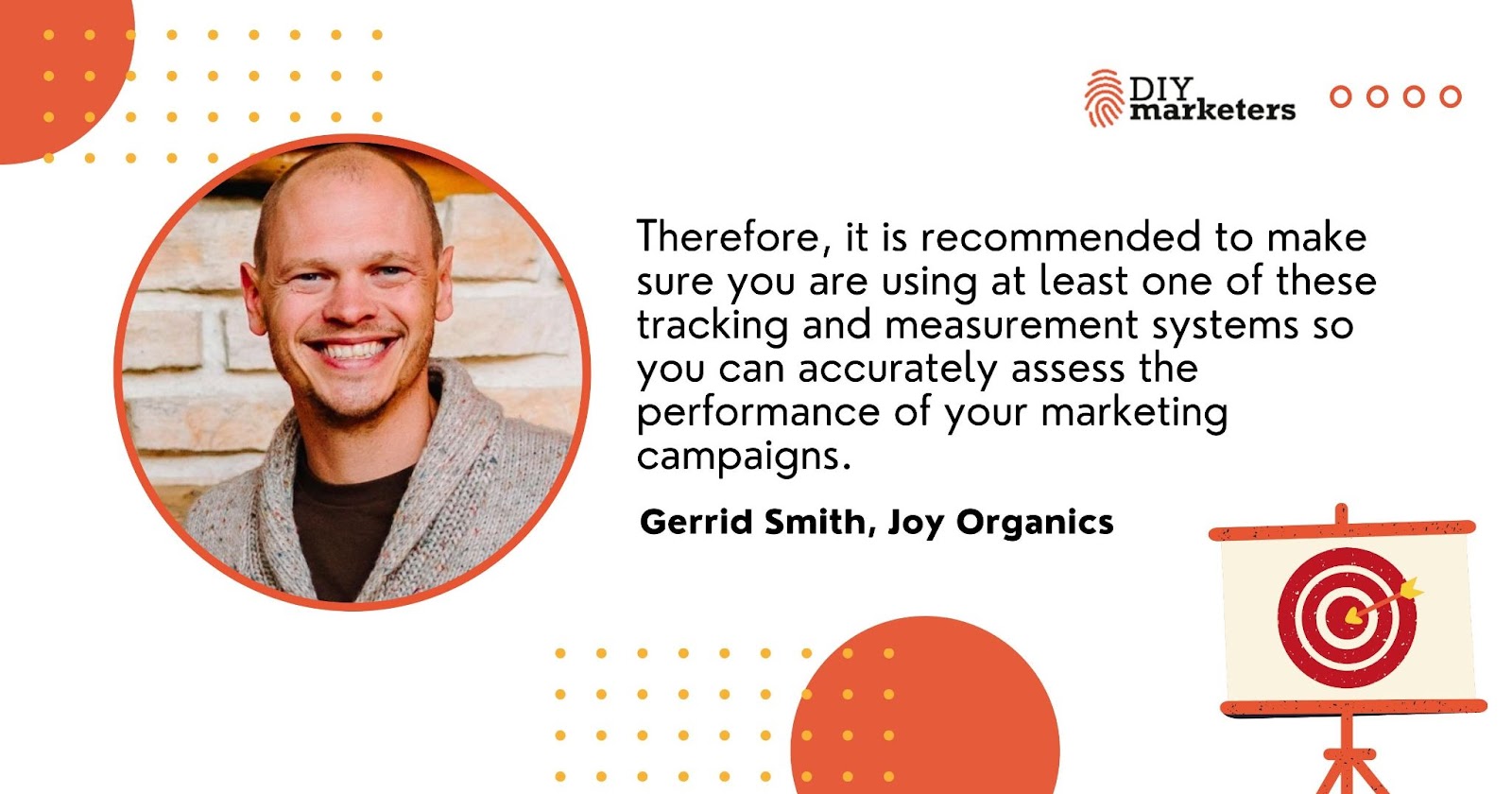
You can see why tracking and measuring are important — and then funneling what you’ve learned back INTO your marketing process so that you can make changes.
Mistake #2: Choosing Strategies Based on Pressure, Not Logic
Most people choose marketing strategies because:
- Someone else is using them
- They feel behind
- They’re afraid of missing out
- A platform looks easy
That’s backwards.
Edward Mellett from Wikijob puts it well:
“One of the most common reasons marketing campaigns fail is because they’re not agile. An agile marketing strategy is one that can quickly adapt to changes in the market. The market is constantly evolving, and what may have worked a few years ago may not work today.”
A marketing strategy should match:
- How your customers already behave
- How long your sales cycle is
- How much trust is required
- How much time you can realistically invest
One good strategy beats five average ones every time.
According to Keap’s 2024 Small Business Trends Report, 48% of small business owners say lack of time is the top reason they don’t market more. If you’re already time-strapped, adding three new platforms isn’t strategy — it’s self-sabotage.
Setting Objectives That Were Unclear and Unrealistic
One of the reasons our
At the beginning of our business journey, we didn’t set clear and realistic objectives.
If your goal was to get 10,000 leads in a single month but you only get 1,000 then unfortunately your marketing campaign is unsuccessful.
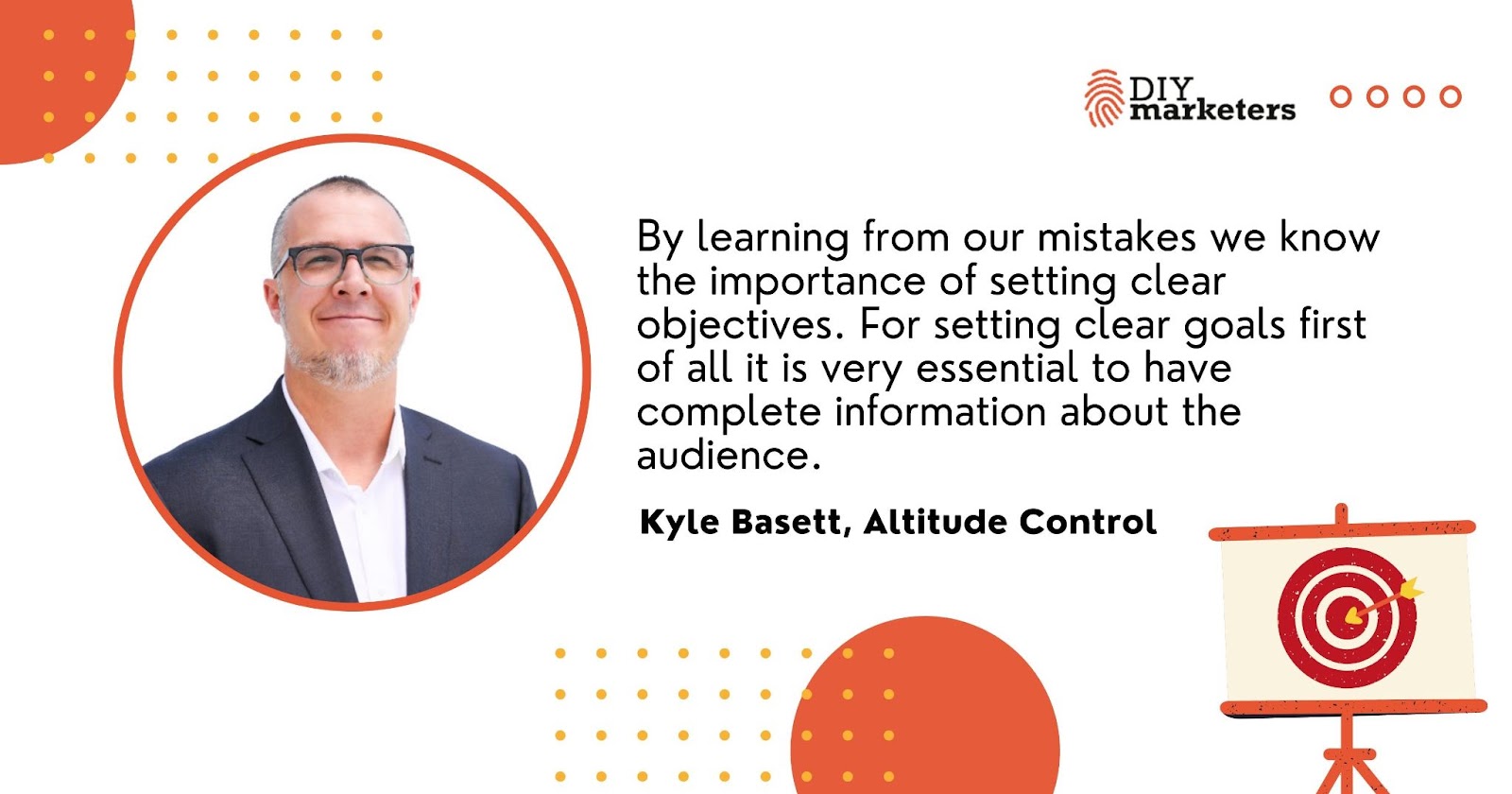
By learning from our mistakes we know the importance of setting clear objectives.
To set clear goals, it’s essential to have complete information about the audience. Like what are their needs and what they expect from you.
So we try to fix this issue by developing clear goals and understanding of the audience. We can only provide good services and can lead our marketing to success when we become able to satisfy our audience.
Kyle Basett, Altitude Control
Targeting a Broad Market
Market research is the best way that you’re going to make sure that you’re targeting the right potential customer.
I remember when I first started my home soundproofing business. I was confident that I could offer my niche services to a mass market and be successful. But I quickly learned that wasn’t the case. The biggest reason my marketing failed was because I was trying to reach too many people with my message. I didn’t have a clear target audience in mind, and as a result, my message got lost in the noise. I learned that it’s important to focus your marketing efforts on a specific group of people, and to craft your message in a way that resonates with them. Only then can you hope to be successful.
Ludovic Chung-Sao, Zen Soundproof
Not Choosing an Ideal Customer
The biggest reason my marketing failed was because I didn’t have an ideal customer profile.
I didn’t know who my target audience was, what pain points they had, or what solutions I could offer them.
As a result, my marketing message was all over the place and didn’t resonate with anyone. I learned that it’s essential to have a clear strategy before starting any marketing campaign.
Once I identified my target audience and what they needed, my campaigns became much more effective. If you’re struggling with your marketing, I recommend taking some time to develop a clear strategy. It will make all the difference in the world.
Thomas Curry, Moving Feedback
Now, let’s move to creating the offer.
I love using the word “Offer” instead of product or service because an offer incorporates EVERYTHING; the product, the service, the package, the people, where you can buy it, and ultimately the customer experience.
An Offer that Doesn’t Connect with the Customer
Market research helps you choose the right customer. And, choosing the right customer, will help you develop an offer that they want and are willing to pay for.
Another thing that came up with our marketers is how important it is to focus on customer experience.
Not Offering a Customer-Centric Experience
One of the reasons why our marketing campaign failed was that the service we provided was not focusing on the customer experience but rather what we thought the customer needed.
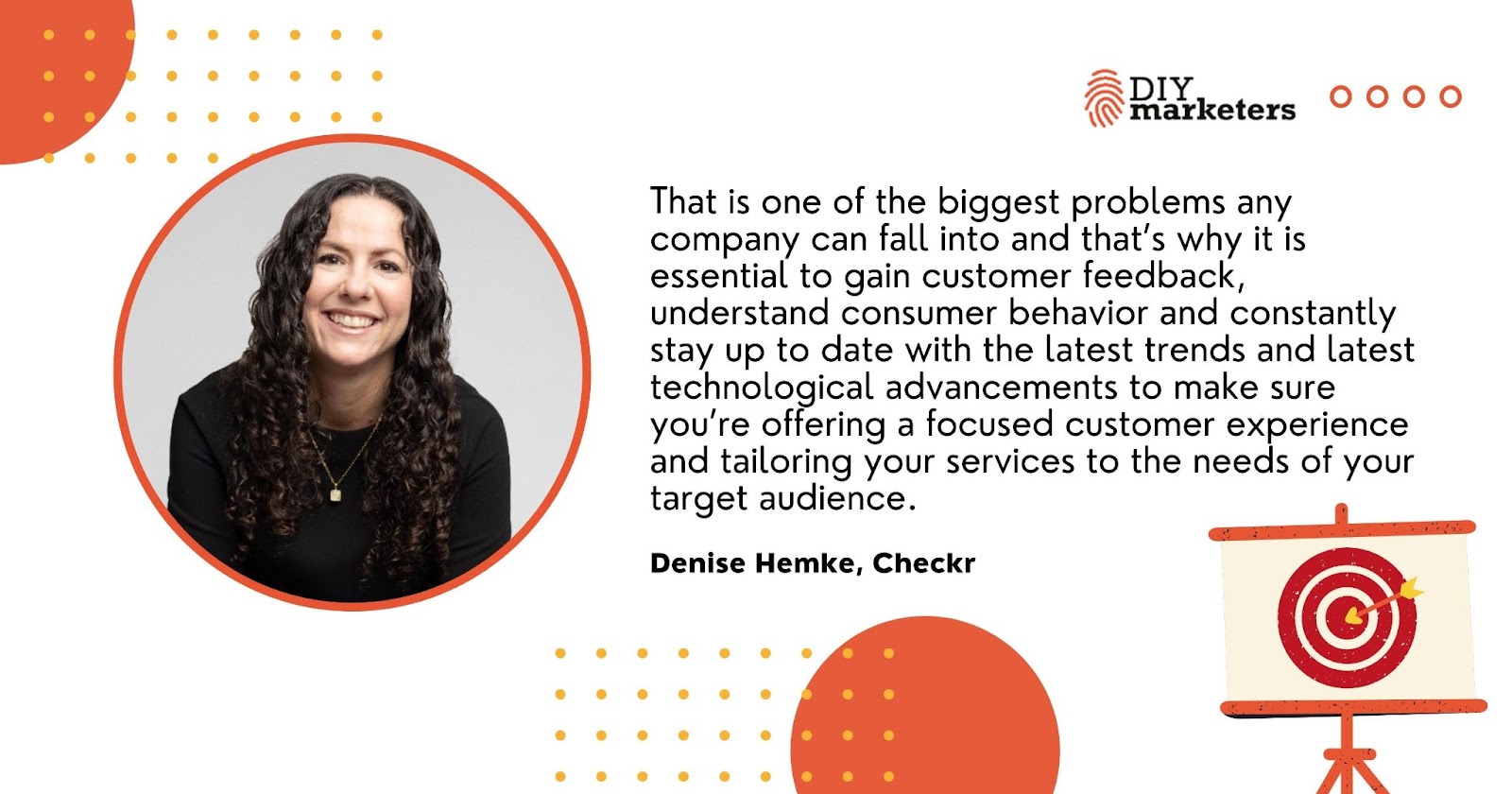
That is one of the biggest problems any company can fall into and that’s why it is essential to gain customer feedback, understand consumer behavior and constantly stay up to date with the latest trends and latest technological advancements to make sure you’re offering a focused customer experience and tailoring your services to the needs of your target audience.
It took us a while to adapt and evolve, but we ended up using social listening to gain the feedback we needed and adjusting our services to meet the needs of our consumers.
Denise Hemke, Checkr
Not Making the Buying Process Easy for Customers
The main reason why our marketing failed is due to the difficult buying process. In the beginning, we were inexperienced and did not have an idea that customers always prefer those brands whose buying process is easy and simple. Because we are living in the modern world of technology and advancements. Obviously, everyone prefers the best but simple buying processes. So now we have made our online selling system quite simple and attractive for customers to retain their loyalty and make our marketing successful.
Alex Savy, Comfynorth
Not Choosing a Marketing Strategy
Choosing a core marketing strategy can eliminate so many mistakes, everything from what channels you’re going to choose and what message you’re going to share, and how you’re going to share it.
No one talks about this, but there are three marketing strategies; content marketing which is an inbound or pull strategy where you’re using content to pull customers in by educating them and helping them choose the best offer.
Then there’s direct marketing where you’re solving a specific problem with a specific offer. This is often a push strategy because you are sending coupons or selling via email or webinars.
And finally, there’s advertising, another push strategy where you are using other people’s audiences to generate leads and paying for it.
Choosing one of these strategies will help you identify exactly WHAT you are going to use as your marketing message.
Here are some real examples of what happens when you don’t choose a core
Pitching for the Wrong Reasons
The most significant marketing lesson I’ve learned is to pitch for necessity rather than luxury.
No matter what product or service you’re trying to sell or who your target customers are, the goal should be to convince them why their lives are incomplete without your service.
Even if our target customers are privileged and rich, talking about how your product can enhance luxury can only work sometimes.
For example, if one is trying to sell an expensive shoe, it should be about how the soles can grip high steep angles, provide comfort for long hours, etc. Rather than being about how it might look elegant when paired with one of their expensive suits. One needs to be opportunistic, smart with words, and believe in his product to successfully carry out this mission.
Kurt Uhlir, kurtuhlir
Sending the Wrong or Ambiguous Message
One of the biggest reasons for marketing failure is that the message that you want to convey can be interpreted in more than one way.
For instance, the message on working out to improve one’s health can backfire if you use a plus-size model and show her transformation.
This can be misinterpreted as body shaming and your marketing falls flat.
Hence, identify your message and craft a
Arthur Worsley, The Art Of Living
The Messaging Wasn’t Cohesive and Uniform
Sometimes, campaigns can get too sporadic when you want to include too many ideas that you think are great. While unique ideas can be impactful and may garner the reach you were hoping for, it’s crucial to first ensure your core message is clear. Once you have this in place, the execution can follow. This way, your campaign presents a uniform message and a coherent approach to the audience.
Asma Hafejee, CMR Surgical
Choose Tactics and Channels
After choosing a specific strategy that tells you exactly what type of messaging you’re going to use and what channels you’re going to use.
I love these examples because they illustrate this point so effectively.
Diversifying on Social Media Didn’t Fit Our Brand
Spreading our marketing efforts on every social media channel was one of our biggest mistakes.
It wasted our financial resources and left us chasing deadlines because we couldn’t reach our target exposure in any of those platforms we engaged in.
It taught us that online diversification of marketing content was not for us, so we needed to change our approach.
Micro-branding was the strategy we pursued to bounce back and save our marketing campaign. We dropped some of our social channels and chose only two where we could yield the most conversion. Doing so enabled us to exert our time and effort on fewer outlets where our success was guaranteed. It was way better than casting a wide net and spreading our content across every platform with less chance of getting noticed.
Sam Tabak, RMBH Charities
Operating on the Wrong Channels
Marketing is a prominent component of any business. If handled properly, it can boost the company’s productivity. Thus, contributing heavily to boosting company growth and intensifying net dividend. But if not addressed properly or if any mishap occurs, it would plummet the company’s growth. Once I also encountered a marketing downfall. I used the wrong channels to endorse my services thus not getting enough clients for my business which eventually resulted in a lack of patrons. When I learned of this matter, I promptly made adjustments by discontinuing the wrong channels and using the right one which eventually generated decent and satisfactory clients promoting the company’s productivity.
Sandeep Bhandari, Askanydifference
Thinking You’re Going to Get Immediate Results
I like to say that marketing is a lot like farming. You plant seeds, you nurture them and you simply trust in the process and that you’re going to get the results you’re after.
The key to successful marketing is choosing your strategy and tactics and then implementing consistently and tracking your performance.
Creating Unrealistic Expectations
We had unrealistic expectations from marketing in the beginning based on the things we picked up from the internet.
Even reputable sources cannot predict all the nuances of the specific niche and product.
We adjusted our expectations based on our experience, and are working on optimizing the process and maximizing the results in a more realistic timeframe. It is important to emphasize that this is an ongoing improvement, not a one-time thing.
Kristina Gligorovic, Localizely
Giving Up Too Quickly
As Léa Soller from Digiberries Paris explains:
Sometimes marketing doesn’t work because our clients give up too quickly.
We often tell our clients that marketing takes 6-12 months to produce results. Yes, you will see some indicators of success along the way, but it takes time to really gain the momentum you are looking for in marketing, especially SEO.
That’s why in marketing, persistence is relatively important. We advise our clients and prospects not to give up marketing after the first month. This is because they will not get their money back in the right way. Give marketing time, it will pay off years later.
Fuel the Fire
Anyone who has done marketing for a company can relate to the fact that marketing budgets are often the first to go when it comes to reducing spending.
Having worked my way up from the lowest levels of sales and marketing to the C-level, I can tell you that it’s hard to get approval for budgets that aren’t based on having followed the marketing process.
Inadequate Budgeting
Honestly, the marketing budget is often arbitrary. Instead of basing the marketing budget on a percentage of revenue, our marketers base the campaign budget on either what is available or on a budget we are comfortable with. But is it enough to see results? The truth is, no.
Very low budgets are problematic for the following reasons:
– Your campaign doesn’t cost enough to last long.
– Your spending is too low to make enough “frequency”.
– Your campaign may not generate enough traffic and may not see sales.
The third is particularly important. You must spend enough to really see a meaningful effect. The real strategy is to balance your campaign objectives with the budget you have.
Kane Jason, Ace Infoway
How to Increase Your Marketing Success
If there’s ONE thing I want you to get from this it’s to follow the marketing process. Think of it as a recipe and take your time during each step. I use a few shortcut marketing rules. And here they are:
Marketing is about choices and tasks based on research. Choose your goals, choose your customer, choose your strategy, choose your message, and choose your channels. Only then, can you start DOING.
Implement your messaging on your channels and measure. Remember you will fail 99% of the time. But there will be that ONE thing you do that does slightly better than all the rest.
THIS is where you start optimizing. Tweak and measure. Tweak and measure.
Give yourself time. The time you give yourself will depend on how long your selling cycle is. If it takes a year for a customer to go through the buying process — you have to give it a year.
Use your results as part of your market research. Rinse and repeat.