
In This Article

- The best low cost marketing ideas for small business aren’t the ones that are free — they’re the ones that fix the gap between you and your next customer. Every idea here targets one specific gap: getting found, building trust, starting a conversation, or borrowing reach you don’t have to pay for.
- 97% of consumers read local reviews before choosing a business. After reading a positive review, 54% go straight to that business’s website. Two free moves — reviews and a clear website — doing more work than most paid campaigns.
- You’ll leave with 20 ideas sorted by the problem they fix, each with a specific result to watch — so you spend $20 or less and know if it worked.
The most effective low cost marketing ideas for small business fall into four categories: get found by buyers, build trust before the sale, start better conversations, and borrow reach from people who already have it. Every idea in this list costs $20 or less in direct spending, works for solopreneurs and small teams, and comes with a specific result to track within two to four weeks.
Here’s the problem with most marketing advice: it tells you to do everything at once. Post on three platforms. Run ads. Start a newsletter. Build a referral system. You end up doing a little of everything and seeing results from none of it. I’ve watched this pattern kill more marketing momentum than any algorithm change ever has. Pick one problem. Run one test. See what happens. Then decide what earns another round.
The $20 Rule
Your time is not free. Every idea below comes with a “watch for” metric because spending $20 without knowing what happened next is how marketing budgets disappear without a trace. Give each idea a two-to-four-week window, record what you spent and how long it took, then decide if it earns a second round.
How do you get found by buyers without spending a lot?
1. Fix the listing customers already find
Spend: $0. Watch: Calls, direction requests, or bookings over the next 30 days.
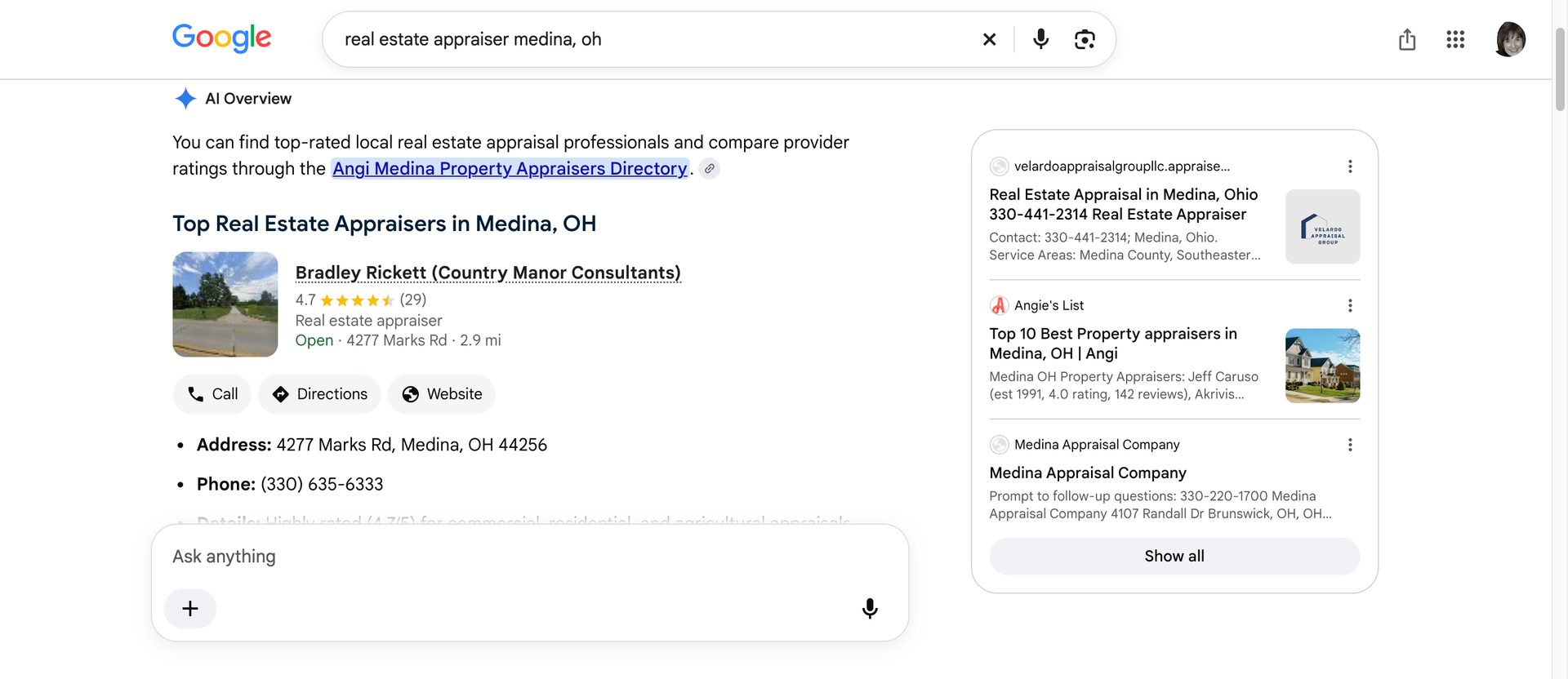
Search for your business the way a customer would — service plus town, not your business name. If your Google Business Profile is incomplete, add current hours, service area, photos, and the clearest path to contact you. Then check whatever directory your specific market uses. Don’t spend an afternoon submitting to twenty of them because a checklist says to.
2. Answer one buying question on your website

Spend: $0. Watch: Visits to the page and relevant inquiries.
Open your email and find a question prospects ask right before they buy. Answer it on a page they can find. A bookkeeper might publish “What do you need from me before you can clean up my books?” A landscaper explains what affects a spring cleanup price. Include who the service is for, what affects cost or timing, and one clear next step. This earns more trust than a page that says “Contact us for all your needs.”
3. Turn one search impression into a better answer
Spend: $0. Watch: Clicks and inquiries from the updated page.
Open Google Search Console and find a query that already shows one of your pages in results. Read the page as if you searched that phrase yourself. Does it answer the question in the first paragraph, or make the reader hunt? Improve that existing page before writing anything new. Add a direct answer, an example, a relevant photo, a next step. If you want the full process, here’s why most small business marketing strategies stall before they get to this move.
4. Make your contact page pass the “ready now” test
Spend: $0. Watch: Completed calls, forms, and bookings.
Hand your phone to someone who has never visited your site and ask them to find your number, service area, hours, and booking option. Fix whatever slows them down. Spending money to drive more traffic to a page that’s hard to act on is an expensive way to confirm a fixable problem.
5. Show what your work looks like
Spend: $0. Watch: Quote requests or service page visits.
Take three honest phone photos: work in progress, finished result, one detail a customer might miss. Post them on the relevant service page with a short explanation — the problem, what you did, who it’s for. “We made room for two cars without asking this family to throw away their camping gear” tells a buyer more than “excellent craftsmanship.”
How do you build trust with customers before they buy?
6. Ask for one honest review after every completed job
Spend: $0. Watch: New reviews added over the next month.
Make the ask part of your standard follow-up — not an occasional campaign when your star rating worries you. “Thanks for choosing us. If you have a minute, an honest review of your experience helps other customers find us. Here’s the link.” Ask for their genuine experience, not a specific rating. Google prohibits incentivized reviews. The right way to get more Google reviews is consistent asking, not bribing. BrightLocal’s 2026 survey found 74% of consumers only care about reviews from the last three months — so one great review today beats ten old ones.
7. Respond to the reviews you already have
Spend: $0. Watch: Whether prospects mention your responses.
Set aside 15 minutes to reply to recent reviews — positive and negative. Acknowledge real situations. If something went wrong, name it and offer a path to resolve it. In that same BrightLocal survey, 42% of consumers said they’d avoid a business that ignored reviews entirely. The next customer reads your responses before they ever call you.
8. Publish one tiny case story
Spend: $0. Watch: Inquiries that mention that type of problem.
Ask one customer for permission to describe a project. Four short parts: the problem, the constraint, what you changed, and the outcome. Use a real number if you have one. “The owner needed a follow-up system for estimates that didn’t feel pushy. We wrote a two-message sequence and made it part of her quoting process.” Then link to the service that produced that result.
9. Replace one vague claim with useful proof
Spend: $0. Watch: Whether prospects ask fewer basic trust questions.
Find a claim on your website like “excellent service” or “high quality.” Replace it with something a buyer can evaluate — a process, a turnaround policy, a work sample, or a customer’s specific words used with permission. “Excellent service” asks people to believe you. “You’ll receive a written scope before we start and we’ll review it together” tells them what to expect.
10. Write a one-page “what happens next” guide
Spend: $0–$10 if you print copies. Watch: Consultations booked, common questions that stop coming up.
Explain what happens after someone contacts you: how you assess the job, what you need from them, when they get a quote, what the first appointment involves. Put it on your site. Send the link to prospects. For services people buy infrequently — tax prep, legal work, home renovation — removing that uncertainty moves people faster than any promotional offer.
How do you start better conversations with potential customers?
11. Reconnect with five past customers
Spend: $0. Watch: Replies, referrals, and repeat appointments.
Choose five customers whose needs might have changed. Send a personal message tied to their specific situation — not a broadcast “checking in” email. A home organizer could ask whether last year’s entryway system is still holding up. A consultant could share a relevant update and ask if it affects the client’s current work. Personal, specific, and tied to them.
12. Follow up on three stalled conversations
Spend: $0. Watch: Replies and decisions — including “not now.”
Find three people who asked for information and disappeared. Send one brief message: “When we last talked, you were deciding whether to handle this now or wait until fall. Is that still where you are, or has something changed?” Don’t manufacture urgency. You want to learn whether the obstacle is the offer, the timing, the price, or your follow-up process. All four are fixable once you know which one it is.
13. Ask one customer what almost stopped them from buying
Spend: $0–$10 for a thank-you coffee, no public review request attached. Watch: Objections you can address in your sales materials.
One good answer here can reveal that your price page lacks context, your response time is unclear, or customers don’t understand what’s included. Listen before you explain. Then use what you learn to fix the sales process — not as permission to quote them publicly without asking.
14. Run a two-option offer test
Spend: $0. Watch: Qualified inquiries for each option.
Present two clear ways to buy instead of one vague “custom solution.” A tutor could offer a single exam-prep session and a four-session plan. A consultant could offer an audit and an audit-plus-implementation package. Explain who each is for and what it includes. Test it in real conversations before redesigning your website. This is one of the fastest ways to make more money with fewer customers — and it costs nothing to test.
15. Send one useful email to your existing list
Spend: $0 if your plan covers the send. Watch: Replies, clicks, and inquiries — not open rate alone.
Answer a question your customers are dealing with this week, then include one relevant invitation. “Three signs your fall maintenance can wait — and one sign it can’t,” followed by a link to book an assessment. Email remains one of the highest-ROI channels for small businesses according to Litmus’s 2026 State of Email research. Need the habit? Start with how to do email marketing without overcomplicating it.
How do you get more reach without paying for ads?
16. Trade one useful introduction with a complementary business
Spend: $0. Watch: Introductions that turn into conversations.
Find a business whose customers encounter a problem you solve — but who doesn’t compete with you. A home inspector and an insulation contractor could each explain when the other professional is worth calling. Agree on a non-exclusive, useful way to make introductions. This is the foundation of every effective referral and loyalty program — and it starts with one honest conversation.
17. Co-host a 15-minute demonstration
Spend: $0–$20 for a small printed handout. Watch: Attendees who request the checklist, quote, or next appointment.
Skip the vague “networking event.” Teach one narrowly defined task with a partner whose audience needs it: “How to photograph your products with your phone” or “What to gather before meeting a bookkeeper.” Each partner invites relevant people. Attendees leave with a practical next step. A small demonstration earns attention by being useful — no big audience required.
18. Turn a customer’s question into a piece of content
Spend: $0. Watch: Relevant replies and inquiries.
With permission, turn a real question into a short video, post, or FAQ: “A customer asked whether this repair could wait until spring. Here’s what we check before answering.” Keep identifying details out unless you have approval. Post it where your buyers already spend time, then link to the fuller answer on your site. You don’t need to become a content creator — you need to answer one question a buyer recognizes.
19. Pitch a local publication one specific, useful angle
Spend: $0. Watch: Responses from editors and resulting inquiries.
Pitch a specific, timely story — not “please feature my business.” A tax preparer might offer a list of records local freelancers commonly forget to gather. A garden center explains what homeowners can realistically plant after an unusually dry season. Include a short explanation, why it matters to that publication’s readers, and how an editor can reach you. There may be no coverage. The test is whether your expertise solves an editorial problem.
20. Put a referral prompt in the right moment
Spend: $0–$20 for a few printed cards if useful. Watch: Introductions, not cards distributed.
When a customer has described a positive result, make it easy to recognize someone you could help: “I’m glad that solved it. If you know another business owner dealing with the same issue, you’re welcome to introduce us.” Describe the problem you solve — name it specifically, not a vague “spread the word.” If your referral system has gone quiet, read why referral marketing stops working — and how to restart it fast.
Which low cost marketing idea should you start with?
| If your problem is… | Start with ideas… | First result to watch |
|---|---|---|
| Nobody can find you | 1, 2, 3 | Calls or clicks within 2 weeks |
| People find you but don’t buy | 9, 10, 14 | Fewer “I need to think about it” responses |
| You need work this month | 11, 12, 20 | Replies within 48 hours |
| You want steady new leads | 6, 16, 17 | New introductions within 30 days |
| You’re burned out on marketing | 8, 15, 18 | One piece of content that earns a reply |
The right low cost marketing idea for your business is the one that fixes your biggest gap right now. Pick one problem first — not one idea, one problem. If people can’t find you, start with your Google Business Profile or a buying-question page. If they find you but hesitate, improve your proof and the path to contact you. If you need work this week, follow up on stalled conversations and reconnect with customers you already know.
Give each test a defined window — two to four weeks for outreach, longer for search-page updates. Record three things: what you spent, how long it took, and what happened next. A reply, a clearer objection, or a qualified inquiry all count as results. $20 that teaches you why customers aren’t buying is worth more than $20 spent getting more strangers to see the same unresolved problem. For a deeper look at why this matters, read why marketing strategies fail for small businesses even when you follow them exactly.
Frequently asked questions about low cost marketing ideas for small business
What is the most effective low cost marketing idea for a brand new small business?
Fix your Google Business Profile first. It’s free, takes under an hour, and it’s the first place a local buyer looks when they’re ready to spend money. Add your real hours, service area, current photos, and the clearest possible path to contact you. Once that’s done, add a page to your website that answers the single most common question your prospects ask before they buy. Those two moves cost nothing, address the two biggest reasons new businesses lose buyers before they ever connect, and give you something specific to measure within 30 days. The goal isn’t to build a marketing system — it’s to remove the two most common friction points between a buyer who is ready and a business that’s hard to reach or hard to understand.
How do I market my small business with no budget at all?
Start with the people who already know you. Message five past customers with a personal, situation-specific note — not a broadcast. Follow up on three conversations that went quiet. Ask one happy customer who else they know with the same problem. This approach costs nothing and moves faster than any cold tactic because the trust is already there. According to word of mouth marketing research, peer recommendations consistently outperform paid acquisition for small businesses at every budget level. The mistake most owners make with zero budget is reaching for new strangers first — when the fastest path to a customer is always through someone who already said yes once.
Are low cost marketing ideas mostly about social media?
No — and for most small businesses, social media is not the highest-return low cost option. The ideas that consistently produce the fastest results are: fixing search visibility, improving how you ask for reviews, following up with people who already expressed interest, and building simple referral habits with complementary businesses. Social media can support those goals, but it works best as a distribution channel for content you’ve already created — not as a standalone strategy that requires daily posting to see results. The 2026 small business marketing trends data shows referrals and direct outreach still outperform most organic social for local and service-based businesses with small lists.
How long should I give a low cost marketing idea before deciding it’s not working?
Two to four weeks for direct outreach tactics — reconnecting with past customers, following up on stalled leads, asking for referrals. For search and content updates, expect four to eight weeks before you see meaningful movement in clicks or inquiries. The key is recording a specific result before you start, not after. If you decide upfront that “working” means one reply, one inquiry, or one new review, you end with data instead of a gut feeling. Switching tactics before a test has run its window is the most common reason small business owners feel like nothing works. It’s not that the idea failed — it’s that the window closed before any result had time to appear. See the difference between marketing strategy and tactics for how to build realistic timelines into your plan.
What’s the difference between a low cost marketing idea and a free marketing idea?
Every free marketing idea costs time, and your time has real value. A 2025 Constant Contact survey found 42% of small businesses had less than one hour per day for marketing — which means “free” is never free — it’s paid in hours instead of dollars. The distinction worth making is between ideas that are measurable and ideas that aren’t. A free social media strategy that consumes eight hours a week without a trackable result is more expensive than a $20 test that teaches you something specific. Low cost marketing works when you treat each idea as an experiment with a defined result, a defined window, and an honest record of what happened — not as a vague ongoing activity that’s hard to evaluate. If you want a simple framework for running that kind of experiment, the 17-minute daily marketing routine is a good place to start.
Keep going with these
- Guerrilla marketing for small business: your complete low-cost playbook
- How to advertise your small business when every dollar counts
- Marketing burnout is real — here’s how to reset without quitting
- What email marketing ROI actually looks like for small business
- Networking follow-up email templates that actually get responses
Not Sure Which of These to Start With?
Book a Fix-It Session with Ivana. In 30–60 minutes, you’ll know exactly which marketing gap is costing you the most customers right now — and which move fixes it first. No guessing. No generic advice. Clear next steps from someone who’s looked at hundreds of small business marketing setups.