In This Article
Your customers hate the loud phone guy, and almost none will confront him. Guess who gets the job.
Somebody three chairs away is playing a cooking video at full volume, and the whole waiting room is studying the carpet.
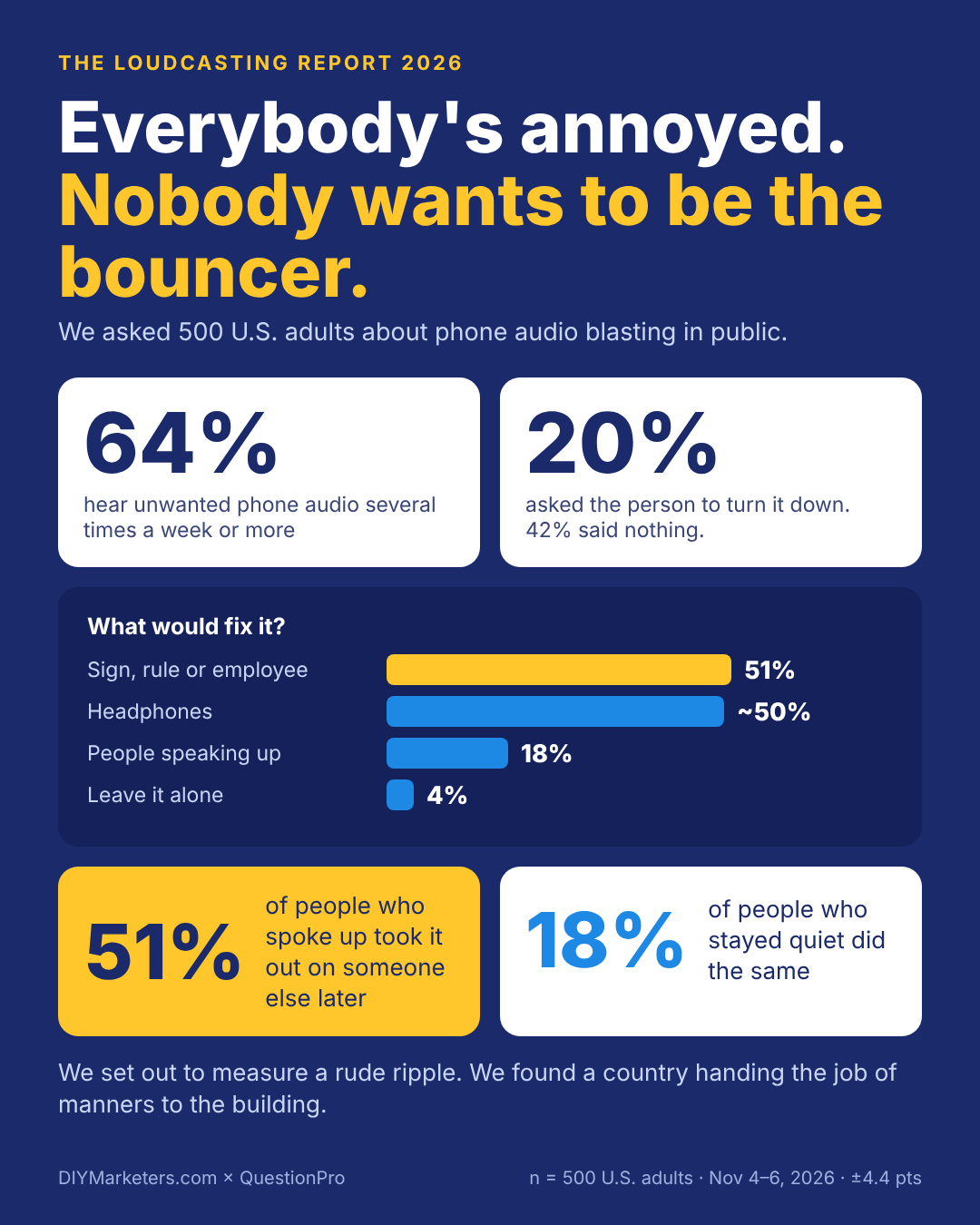
It’s called loudcasting a.k.a playing video or audio from your phone out loud in a shared space. I surveyed 500 U.S. adults with QuestionPro about unwanted phone audio, and 64% hear it several times a week or more. 29% hear it every day or almost every day.
Read this as a customer experience report. Your customers sit in your space, hear this stuff, and mostly say nothing to the offender. I would bet they say nothing to you either. You learn about it by watching, and the numbers below tell you what to watch for.
Journalists call it observation. Marketers call it free research. Pull up a chair in your own space for twenty minutes and count the phones.
- Half want you to be the bouncer. 51% named a sign, a business rule or an employee as the fix, against 18% who picked people speaking up.
- Customers pay a price for speaking up. 51% of people who asked someone to turn it down later took it out on someone else, against 18% of the people who stayed silent.
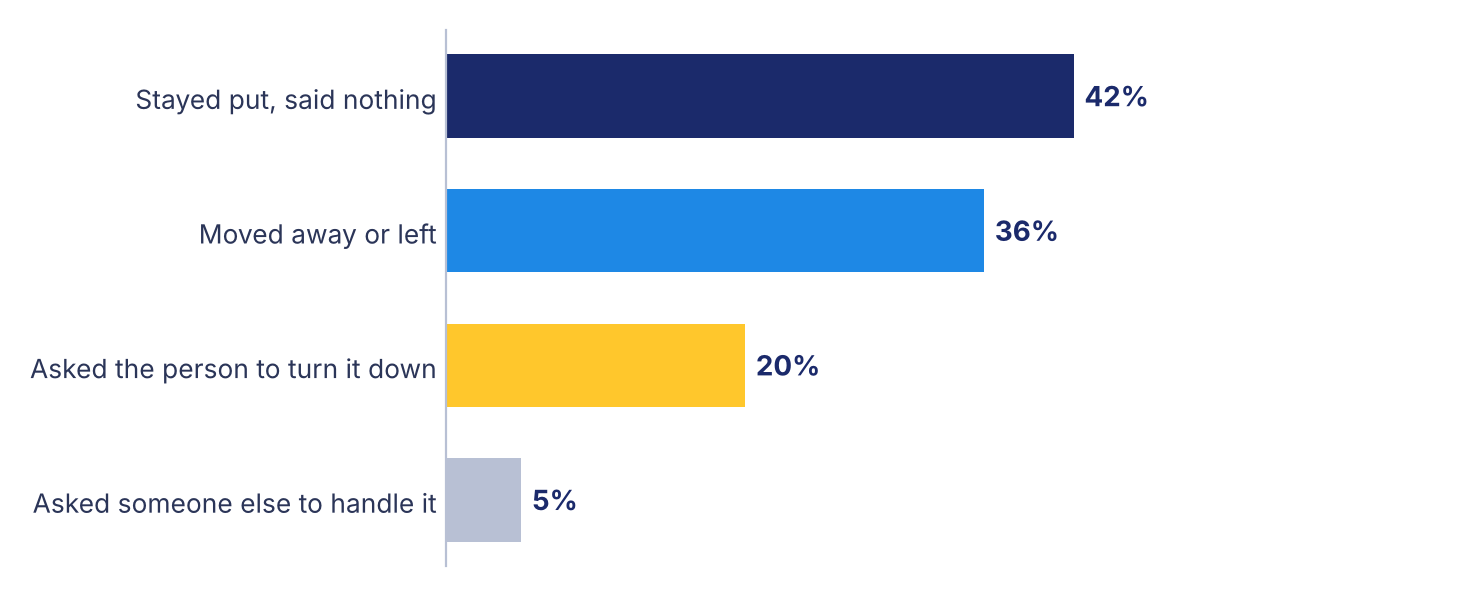
- Nobody says a word. Only 20% asked the person to turn it down, 42% stayed put and said nothing, and 36% moved away or left.
- The daily drip wears customers thin. 29% hear unwanted phone audio daily, and 50% of daily hearers were extremely annoyed at the last incident.
How annoyed do customers get when someone plays a video out loud?
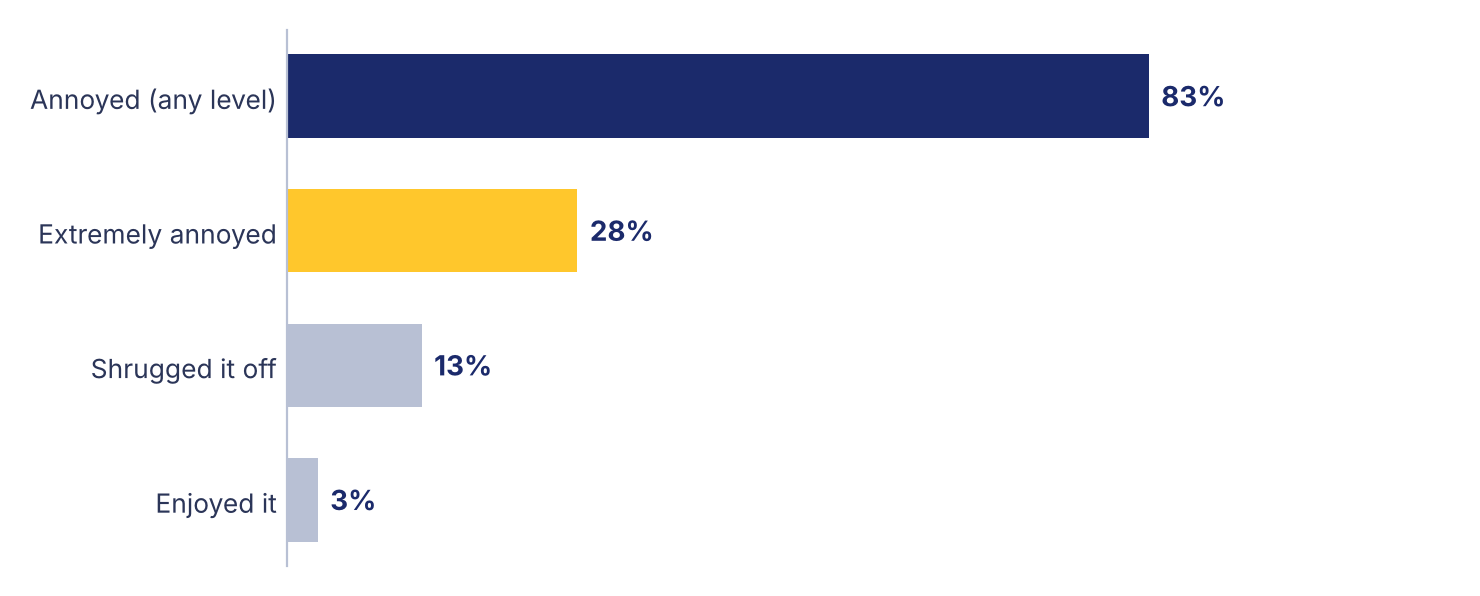
83% of the 475 people who described their last incident with unwanted phone audio felt annoyed, and 28% felt extremely annoyed. Only 13% shrugged it off. Another 3% enjoyed it, and I would like to meet them from a safe distance.
Annoyed customers skip the complaint form. They shift in their seats, check the clock and glance at your front desk. Two minutes of watching those glances tells you more than a comment card collects all month.
Finding 2
Will a customer ask someone to turn the sound down?
No. Only 20% of the 418 people who recalled their reaction asked the person to turn the unwanted phone audio down.
stayed put and said nothing. Another 36% moved away or left, and 5% asked someone else to deal with it.
Stand where your customers sit during your busiest hour. Count how many people shift seats, reach for headphones or leave the room when a phone gets loud. The count is your baseline.
What does it cost a customer to speak up?
51% of the people who asked someone to stop the unwanted phone audio later took it out on someone else, against 18% of the people who stayed silent. “Took it out” means they felt less patient with someone, got short with someone or avoided talking to someone. The gap holds after accounting for annoyance level, age, gender and where people live.
later took it out on someone.
later took it out on someone.
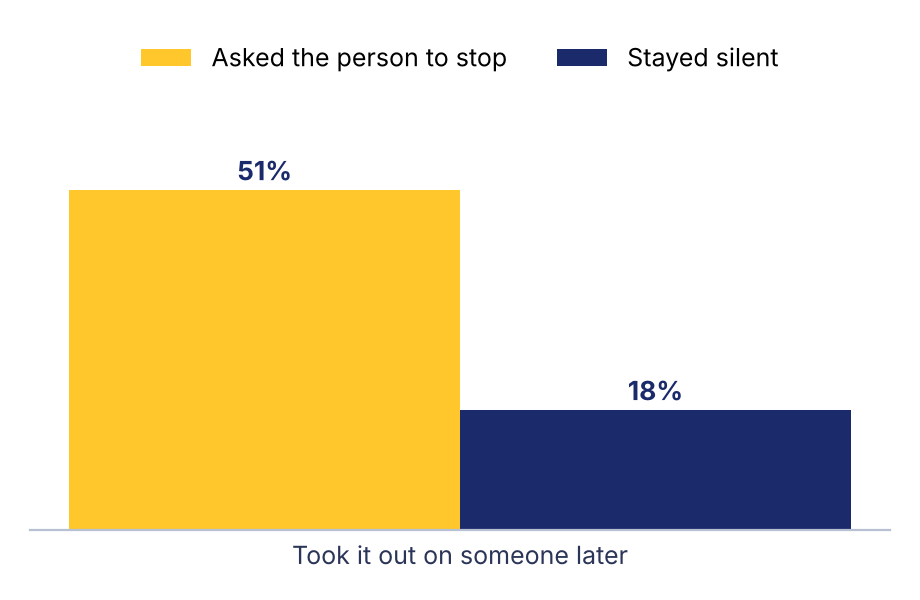
Read this as a pattern. The survey does not show whether speaking up causes the bad mood, because people who speak up are sometimes quicker to react to begin with.
Every customer you turn into a referee pays a small tax, and the bill lands on whoever they meet next. Your cashier is a likely recipient.
In another QuestionPro survey, 20% of 400 adults stayed quiet about a purchase problem because they knew the seller. I wrote up the fix in how to get honest customer feedback.
Finding 4
What do customers want you to do about unwanted phone audio?
51% named a sign, a business rule or an employee asking people to turn it down. Only 18% picked people speaking up, and 4% said nothing needs to change. Half also named headphones.
Who should handle unwanted phone audio?
Selected answers. Respondents picked as many answers as fit. Source: DIYMarketers and QuestionPro survey, n=500, November 2026

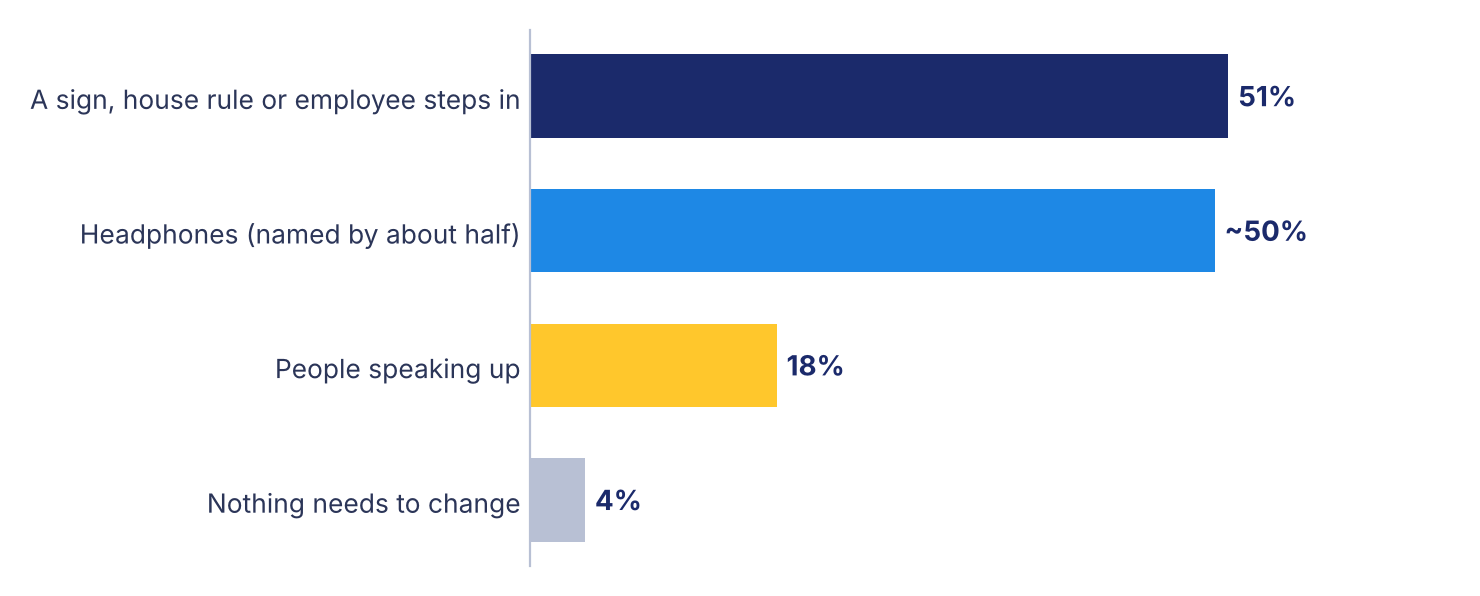
About a third as many people pick speaking up as pick a sign, a rule or an employee. I call this the bouncer gap. Everyone agrees on the problem, and everyone hands the fix to somebody else.
“Being inconsiderate is not a phone problem. It is strictly lack of social consciousness.”
A survey respondent, in their own words
Put the rule in writing
From the data. 51% want a sign, a rule or an employee to step in.
Try this: Post one friendly sentence where phones come out and let the sign do the talking.
Make customers police each other
From the data. Only 18% pick people speaking up, and 51% of those who did later took it out on someone.
Try this: Give your staff one line to say so no customer has to.
Where in my business does unwanted phone audio bother people most?
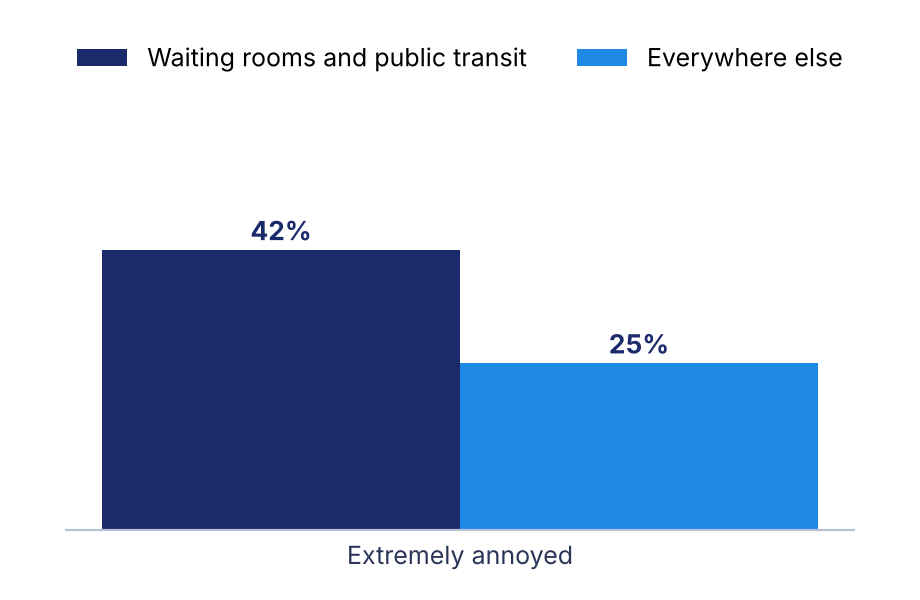
People in waiting rooms and on public transit were extremely annoyed 42% of the time, against 25% elsewhere. Where leaving is hard, annoyance climbs. A salon chair, a treatment room or a clinic row works like a waiting room.
were extremely annoyed.
were extremely annoyed.
Finding 6
What does a daily dose of loud phones do to customers?
The daily drip wears people down: 50% of people who hear unwanted phone audio every day or almost every day were extremely annoyed at the last incident.
of daily hearers were extremely annoyed. Weekly hearers sat at 9%.
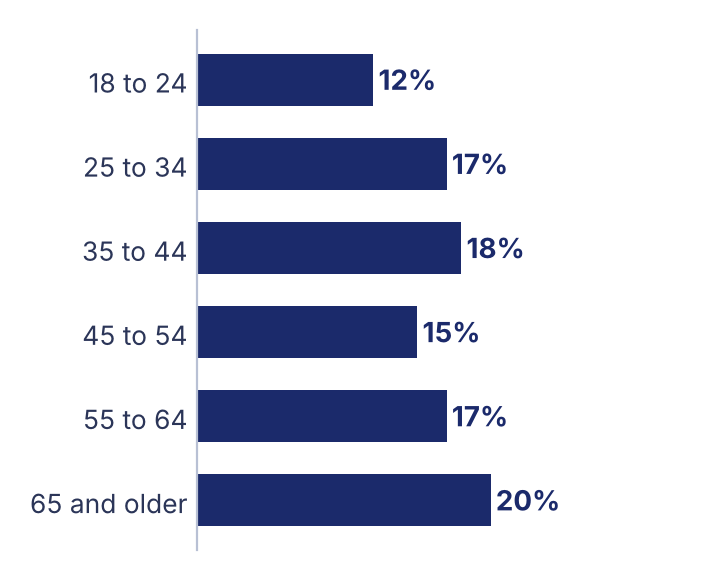
About half of 45 to 54 year olds hear it daily, the highest of any age group.
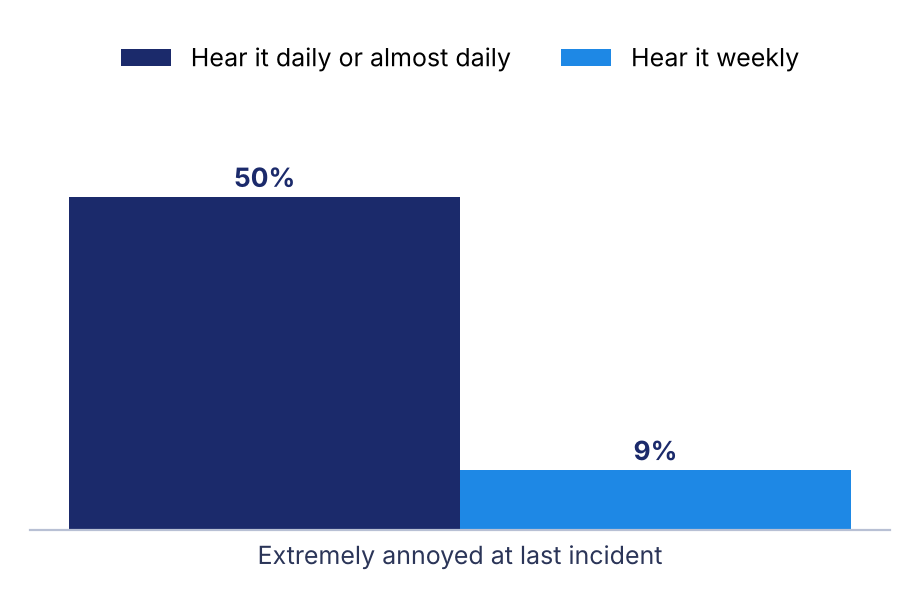
Your regulars show up with a short fuse. A person who hears this all day has less patience for one more speakerphone call in your café.
Do older and younger customers react differently?
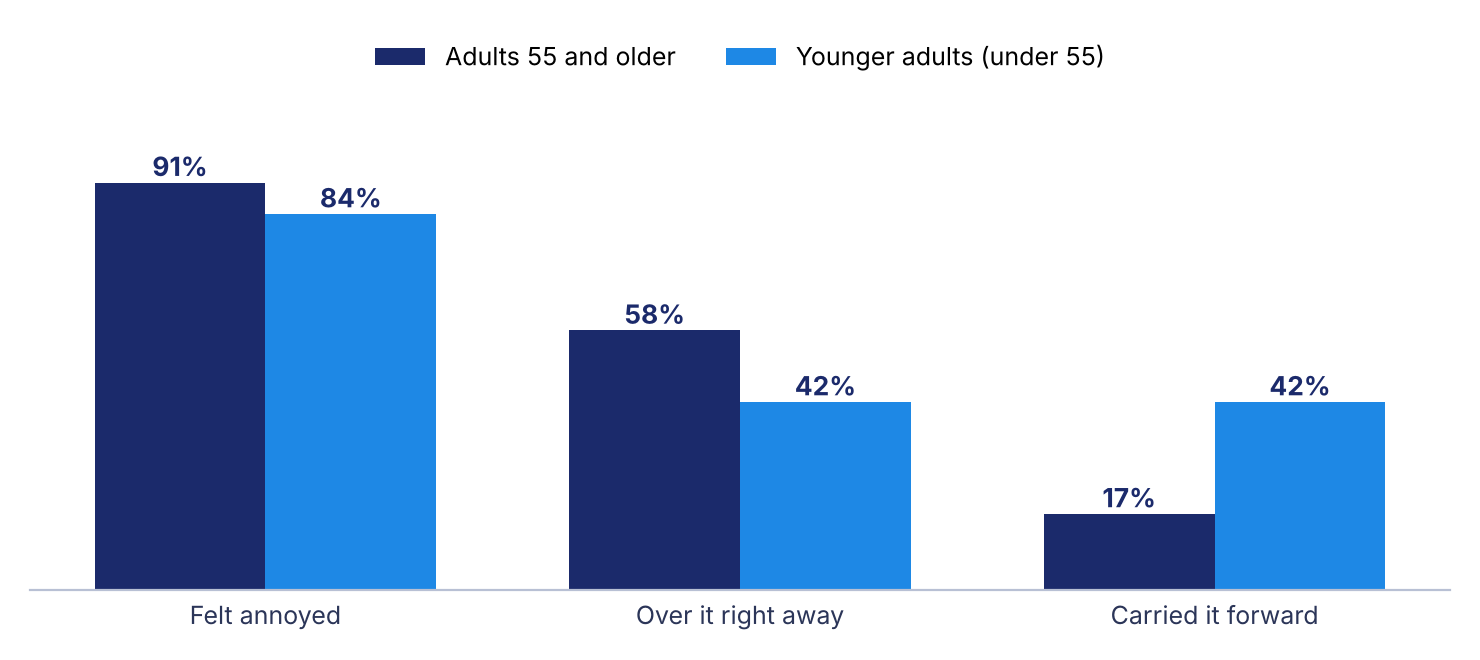
Yes. Adults 55 and older get angrier at unwanted phone audio (91% against 84% of younger adults) and recover faster (58% were over it right away, against 42%).
carried it forward. 91% felt annoyed and 58% were over it right away.
carried it forward. 84% felt annoyed and 42% were over it right away.
The fixes differ too. 29% of adults under 35 use headphones in the moment, against 3% of adults 55 and older. 37% of adults 55 and older lean toward public awareness campaigns, against 23% of 18 to 34 year olds.
My read: a coworking floor full of 28-year-olds takes a headphone basket well. A clinic waiting room full of 60-somethings wants a sign.
Finding 8
Do headphones fix it, and does the bad mood spread?
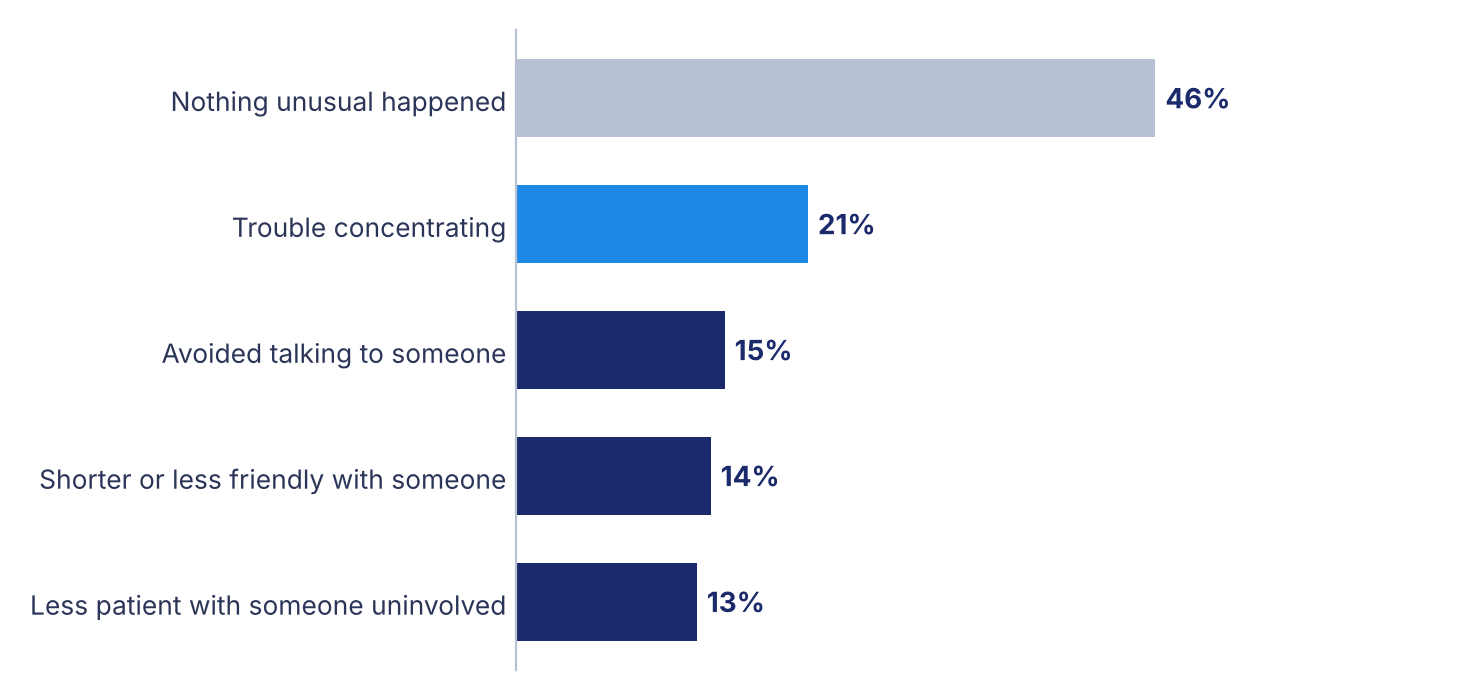
Headphones fall short: 48% of headphone users still reported a rough moment afterward. The ripple from unwanted phone audio is modest, and 46% said nothing unusual happened.
What happened after the last incident?
Respondents picked as many answers as fit. Source: DIYMarketers and QuestionPro survey, n=418, November 2026
Extreme annoyance makes the difference. 45% of extremely annoyed people reported a social side effect, against 26% to 30% of people who were a little or somewhat annoyed. Most people moved on fast: 82% were not irritated or were over it within a few minutes.
How do I manage loud phones without becoming the bad guy?
Customers hand you the job of managing unwanted phone audio. Here is how I would take it. None of these ideas are survey findings. They are my suggestions, built on the numbers above.
Give sound a home
Remember the smoking section? Borrow the idea. Name a corner the Sound-On Seats, where videos, speakerphone and calls are welcome. Everyone else gets the rest of the room.
Try this: Put the Sound-On Seats far from the door, the desk and your best chairs.
Build a quiet zone
No phone audio and no calls. Label it so nobody argues. Some owners go further and make it adults only. Test this one with care. The survey did not measure kids, and your local rules and your regulars will tell you more than I do.
Try this: Pilot the zone for two weeks and count complaints before you extend it.
Lend the headphones
Keep a basket of wired earbuds at the front desk. Adults under 35 already reach for headphones (29%), so give them a polite way to do it.
Try this: Add a sign: Borrow a pair, keep the peace.
Write a sign with a pulse
A sign carries the rule so your staff does not have to. Write it like a person: “Sound off in here. Everyone is waiting too.”
Try this: Post it at eye level where phones come out, and skip the front door.
Hand staff one line
“Would you mind switching to headphones? We keep this room quiet for everyone.” The business owns the rule, so no customer has to referee.
Try this: Practice it twice. Say it with a smile.
What do I do on Monday morning?
- Watch for 20 minutes. Sit in your busiest area and count every phone-audio moment.
- Mark the flinch points. Note where people glance at your desk, shift seats or leave.
- Pick one fix. Choose a sound-on zone, a quiet zone, a headphone basket or a sign.
- Write the staff line. One sentence, said with a smile.
- Count again in two weeks. Compare the flinches to your baseline.
For more low-cost ways to make waiting less painful, read my 26 tips for happy customers and how to create joy in customer experience. If a customer already left, feedback from lost customers shows you how to ask why.
Frequently asked questions about unwanted phone audio
What is loudcasting?
Loudcasting means playing video or audio from a phone out loud in a shared space, and 64% of 500 U.S. adults hear unwanted phone audio of this kind several times a week or more. Another measure shows 29% hear it every day or almost every day. The DIYMarketers and QuestionPro survey, fielded in November 2026, uses this definition.
Will customers push back if I set a rule about phone audio?
Only 4% of 500 U.S. adults said nothing needs to change about unwanted phone audio in public, so few customers will push back on a rule. 51% named a sign, a business rule or an employee as a fix. Pilot any rule in one area first. The advice is mine, not a survey finding.
How do I handle unwanted phone audio in my waiting room?
Put the rule on a sign and give your staff one line to say, because only 20% of the 418 people who recalled a reaction asked the person to turn it down. Customers rarely police each other. Add a sound-on corner or a headphone basket if your space allows. These tactics are my suggestions, not survey findings.
Do headphones solve the problem of loud phone audio?
Headphones help less than people expect, since 48% of headphone users still reported a rough moment afterward. About half of respondents named headphones as a fix, and 29% of adults under 35 use them in the moment, against 3% of adults 55 and older. A loaner basket still earns its spot in a busy room.
Want a second set of eyes on your customer experience?
A Fix-It Session gets you a 24-hour video audit of your marketing and a clear first fix.
Methodology
DIYMarketers.com fielded this survey using QuestionPro from November 4 to 6, 2026. 500 U.S. adults took part, drawn from census-based panel sources. Results are unweighted, with a margin of error of plus or minus 4.4 points at 95% confidence for full-sample results, and wider for subgroups. Read the full Loudcasting Report 2026 for every table.
475 respondents described how they felt at the last incident. Questions about what they did, how long the irritation lasted and what happened afterward use the 418 respondents who heard unwanted audio in the past 30 days, recalled a reaction and answered the aftermath questions. “Took it out on someone” means they picked at least one of: less patient with someone who was not involved, shorter or less friendly with someone, avoided talking to someone.
The findings show associations and do not establish cause. Respondents described their most recent incident from memory. Some questions allowed several answers, so shares add to more than 100%. Cuts by age, gender, setting and reaction rest on smaller bases, so read them as indicative. Respondents included 250 women, 242 men and 8 who are nonbinary, another gender or preferred not to say. 163 live in urban areas, 223 in suburban areas, 111 in rural areas and 3 were not sure.