
In This Article
- Your busiest customers want one thing this season: time. The best holiday offer ideas give it back. Make buying easy, and skip the pitch.
- Only 54% of shoppers in BCG’s 2026 Black Friday study believe advertised Black Friday prices beat normal prices. Your 20% off looks like everybody else’s 20% off.
- You’ll walk away with nine fixes, copy you’ll want to steal, and the one sales habit quietly pushing your most loyal customers toward the door.
Everyone thinks Black Friday is all about discounts. These days, the deal matters a lot less than it used to. The holiday offer ideas worth your effort give customers something better than a markdown: their time back. Clear prices, a short path to checkout, and nobody upselling them on the way out.
Last month a garage door technician came to my house to program a new remote. A remote. Before he finished, he pitched me a new motor, and when I said no thanks, his whole demeanor changed. The next morning my inbox held an estimate for work I never asked about.
My HVAC company runs the same play. An AI receptionist answers the phone (a good one, and I still hate it), and every service visit ends with an upgrade quote, whether my system needs one or not. I haven’t switched for one reason: all my service records live in their system. Call it what it is. Hostage, with a smile.
Here’s what gets me. I was going to call them anyway. Dear local business, I will choose you no matter what. Please stop selling me.
Why should your holiday offer ideas go beyond a discount?
Because shoppers stopped trusting the markdown. BCG surveyed 10,220 consumers across ten countries and found only 54% trust advertised Black Friday prices to beat normal prices. About one in five actively distrust them, and 22% plan to spend less or skip year-end sales because discounts feel permanent.
Look at what earned trust in the same study. Retailer reputation and money-back guarantees tied at the top, ahead of verified reviews and clear price comparisons. Influencer recommendations scraped the bottom at 3%.
Reputation and guarantees are small-business home turf. You know your customers by name. You stand behind your work. Holiday offer ideas built on an easy, trustworthy purchase put you in a category of one.
Who is the “it’s too peopley” holiday shopper?
This customer works two jobs, or one job and a side hustle. Pew Research Center reports 25% of U.S. adults belong to the sandwich generation, with a parent 65 or older plus kids to raise or support. Among Americans in their 40s, the number hits 54%.
Money feels tight, too. PwC’s 2026 holiday outlook found 80% of consumers plan to follow a budgeting strategy this season.
So this person treats an hour like cash. They show up with a list, a budget, and zero patience for what my mom would call “your marketing sh*t.” Some people love the holiday chaos and the energy. God bless them. This article is for everybody else. If your customers sound like the second group, lean in.
The good news? They like you already. In the Friendship Premium survey DIYMarketers ran with QuestionPro, 74% of 400 U.S. adults paid more to buy from someone they know (see the full report). Price ranks low on the list of reasons people stay, as these customer loyalty statistics show. Loyal customers arrive ready to buy. Every extra hoop gives them a reason to leave.
Need More Ways to Spread the Word?
Browse this roundup of seasonal campaign formats, from email to social posts, and pair one with your holiday offer.
Why do small businesses come across as pushy during the holidays?
Most pushiness comes from systems built for the seller’s convenience. The auto-estimate. The bot on the phone. The seven-email follow-up sequence. The upsell script at the register. Each one makes selling more efficient for you and makes buying more work for the customer.
I sort the damage into three kinds of friction:
| Type of friction | What the customer thinks | Where it shows up |
|---|---|---|
| Task friction | “Why is this so much work?” | Hunting for prices, repeating information, fuzzy pickup instructions |
| Decision friction | “Why am I choosing things I didn’t come here for?” | Surprise upgrades, 14 clever package names, vague recommendations |
| Defensive friction | “Do I have to fight to say no?” | Repeat pitches, unrequested estimates, a chilly vibe after “no thanks” |
Defensive friction does the most damage, and research backs this up. A 2025 study in Psychology & Marketing ran five experiments comparing two sales approaches. Shoppers encouraged to take their time and think things through spread more positive word of mouth than shoppers pressured to buy fast. The reason: the decision felt like theirs.
Business buyers react the same way. Gartner found 73% of B2B buyers actively avoid suppliers who send irrelevant outreach.
Sell the Shortest Path to Done
Your real holiday offer is the distance between “I need this” and “handled.” Shrink it, and you win every customer who refuses to fight the crowd.
What are the best holiday offer ideas for customers who hate the hassle?
Pick two or three of these holiday offer ideas. Do them well. Each one works for a gift shop, a salon, a consultant, or a home service company.
1. Walk your own buying process with a timer
Pick a real task, like “I need a gift for my sister under $40” or “I need someone to fix my booking page.” Then buy from yourself. Write down every spot where you stop, guess, search, or wait.
Each of those spots belongs on your fix list. You’re hunting for the moment where buying turns into homework.
2. Narrow the choices to three
A customer who asks “What should I get?” wants a recommendation, and a full catalog tour wears them out. Build small sets around real situations: three host gifts under $25, or a complete gift for a first-time gardener.
For B2B, try: “Choose this if you need a plan. Choose this if you know what’s broken and want it fixed. Choose this if you want ongoing help.” Say who each option fits, and who should skip it.
3. Post the full price up front
Show tax, shipping, wrapping, and add-on costs before checkout. For services, list what’s included, what the client provides, how many revisions you allow, and what costs extra.
Sample copy: “The package is $350 and includes one landing-page review, a prioritized action list, and a 30-minute working session. Implementation is separate. No subscription.”
4. Sell it finished
Look past the purchase. What does your customer still have to do before they get the benefit? Wrap it, add the card, and set a pickup window. For B2B, send one onboarding checklist and a real start date.
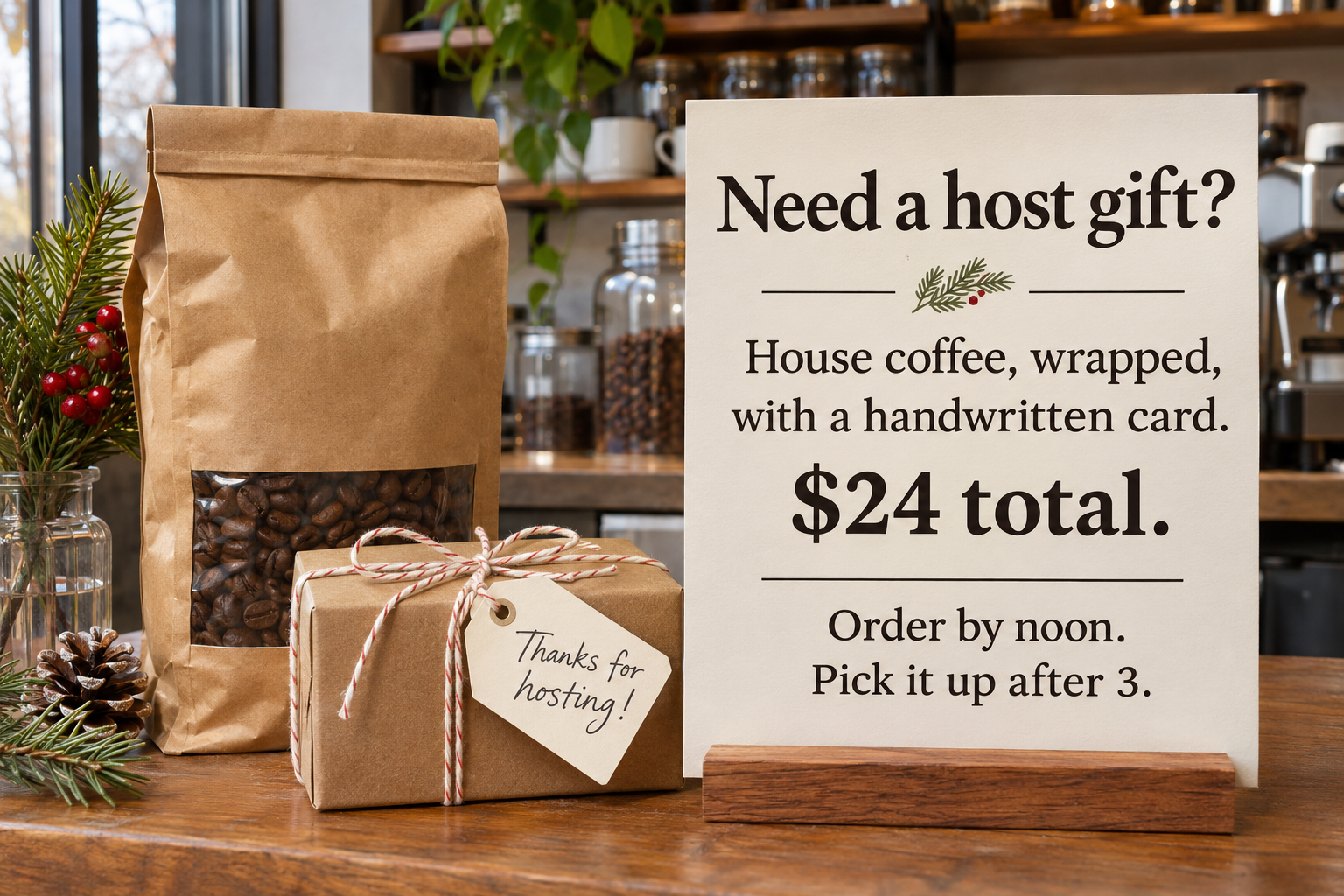
Sample copy: “Tell us what the card should say. We’ll handle the wrapping.” Build the labor into the price so the convenience pays you, too.
5. Open a quiet lane
Call it the holidays, minus the peopley part. Offer limited-capacity shopping appointments, order-ahead pickup windows, or gift picks by email.
Sample copy: “Reserve a 20-minute shopping appointment, tell us your budget, and we’ll have three ideas waiting. No pressure to buy.” The B2B version: “Skip the intro call. Fill out this short form, and we’ll reply with fit, price, and the next start date.”
6. Ask before you estimate
Unrequested estimates are clutter. Explain what you found, show the evidence, and ask one question: “Want a quote on this, or should I note it in your file?” Send the estimate only after a yes.
7. Let “no thanks” end the pitch
Record the decline in the customer file and stop asking about it. Train your team to keep the same warmth after a no. The customer who says no today and feels respected comes back in March.
8. Put a person one tap away
Automation saves you time, and plenty of customers like it. Label the bot as a bot, and give callers an obvious path to a human. For a frazzled buyer, “Press 0 for Dana” beats a perfect bot every time.
9. Use real deadlines only
A countdown timer on a sale you’ll extend Saturday teaches customers to ignore you. Tie urgency to operations: last day for personalization, last ship date, pickup cutoff, appointment slots left.
Sample copy: “Order by Tuesday at noon so we have time to wrap it for Friday pickup.” For the stretch between now and Christmas, pair this with these last-minute holiday sales tips.
How do you promote holiday offer ideas without a discount?
To promote a holiday offer without a discount, make the easier experience the headline. Your best convenience feature belongs in the promotion, front and center, where busy people see it.
| Generic holiday promo line | The too-peopley version |
|---|---|
| “Black Friday savings are here!” | “Your gifts, wrapped and ready for pickup.” |
| “Shop our entire holiday collection.” | “Tell us who’s on your list and what you want to spend.” |
| “Book a discovery call.” | “See the scope, the price, and our next start date.” |
| “Don’t miss out!” | “Get this handled before the holiday rush.” |
Need more ways to get the word out? Browse this roundup of seasonal campaign formats. Shoppers asking ChatGPT for gift ideas reward the same clarity, so clear prices and policies also help with your holiday marketing strategy for AI search.
Still want to run a sale? Build a discounting strategy for small business with a floor under your margin first.
Running Out of Time Before Christmas?
Pair your offer with these last-minute holiday sales tips and sell through the final weeks without feeling icky about it.
How will you know your holiday offer worked?
Skip the vanity counts, like estimates sent or emails opened. Track these instead:
- Purchases completed at full price
- Profit after campaign costs, including wrapping and staff time
- Repeat bookings and orders in January
- Reviews and referrals mentioning how easy you were
- Customers who said “no thanks” once and bought later
Easy experiences are referral fuel, which is the whole idea behind getting referrals without asking.
The best holiday offer ideas start with one move. Pick one thing customers hate about buying from businesses like yours. Remove it. Make the fix your holiday invitation.
Frequently asked questions about holiday offer ideas
What are good holiday offer ideas for a small business?
Good holiday offer ideas for a small business save customers time and hassle, and many of them work without a discount. Examples include curated gift sets at clear price points, shopping appointments for people who hate crowds, order-ahead pickup windows, gifts wrapped and ready to give, and fixed-price service packages with a firm start date. These offers target busy customers who value an easy purchase more than a few dollars off. The timing works in your favor, too: BCG’s 2026 Black Friday study found only 54% of consumers trust advertised Black Friday prices to beat normal prices, so a markdown alone carries less weight than it used to. A convenience-based offer also protects your margin, since wrapping or a pickup window costs far less than a 20% discount. Start with one change, such as posting the complete price or adding a pickup window, and make the change the headline of your holiday promotion.
How do small businesses compete with big stores during the holidays?
Small businesses compete with big stores during the holidays by offering what big stores struggle to deliver: personal recommendations, a calm buying experience, and a relationship customers already trust. A price war with Walmart or Amazon drains your margin and rarely wins. BCG’s 2026 research found retailer reputation and money-back guarantees ranked as the top trust builders for holiday shoppers, ahead of price comparisons. Those are natural strengths for a local shop or service business. Practical moves include curated gift sets at clear price points, shopping appointments for people who hate crowds, order-ahead pickup, and wrapped, ready-to-give purchases. DIYMarketers research with QuestionPro found 74% of 400 U.S. adults paid more to buy from someone they know, which means your existing customers form your strongest holiday audience. Reach them first through email and text, make the purchase easy, and skip the aggressive countdown timers and repeated pitches big retailers rely on.
How do I upsell without being pushy?
You upsell without being pushy by asking permission before you recommend, connecting every recommendation to the problem the customer came to solve, and accepting no the first time. Start by explaining what you found and why it matters, then ask a simple question such as, “Want a quote on this, or should I note it in your file?” Send an estimate only when the customer says yes. Separate safety issues from optional upgrades and tell the customer which one you’re discussing. Record any decline in your customer file so nobody on your team pitches the same thing again, and keep the same friendly tone after a no. A 2025 study in Psychology & Marketing found shoppers who were encouraged to take time and think spread more positive word of mouth than shoppers pressured to buy quickly, because the decision felt like theirs. Respectful recommendations protect the relationship, and customers remember who let them decide.
Should small businesses use AI receptionists or chatbots during the holidays?
Small businesses should use AI receptionists or chatbots during the holidays only when the tool makes life easier for the customer, and every bot needs a clear label plus an obvious path to a human. Automation helps with simple jobs like store hours, order status, pickup times, and appointment booking, and plenty of customers appreciate fast answers at 10 p.m. Trouble starts when the bot becomes a wall between the customer and a person, or when automated follow-ups and estimates fire after every interaction whether the customer wants them or not. Busy holiday shoppers want speed and certainty, and a frustrating bot loop wastes the time they hoped to save. Test your own system before the rush: call your number, ask a question the bot handles poorly, and count how long it takes to reach a person. If the answer is more than one step, add a “press 0” option or a direct text line before December gets busy.
What if my customers expect a holiday discount?
If your customers expect a holiday discount, give them a value they verify for themselves, without slashing prices across your whole store. Deloitte’s 2026 Black Friday survey found 72% of shoppers delayed some purchases until Black Friday weekend for better prices, so deal expectations remain real. You meet them with honest, specific offers: a bundle priced below the sum of its parts with both numbers shown, free gift wrapping, a bonus service with a stated value, or early access for your email list. Show the math so customers see the value for themselves. Avoid inflated “compare at” prices and fake countdown timers, because skeptical shoppers spot them fast and BCG found only 54% trust Black Friday pricing to begin with. Pair any deal with the convenience moves in this article, like clear pickup windows and no pushy upsells, so the offer feels generous and the purchase feels easy. A modest, believable deal plus a smooth experience beats a margin-draining deep discount.
Additional reading
- Why Customers Leave Big Companies for Small Business
- How to Create a Black Friday Marketing Campaign Step by Step
Where Is Your Buying Process Making Customers Work?
Book a 30–60 minute Fix-It Session with Ivana. We’ll walk your buying process together, find the friction, and pick the one fix worth promoting this holiday season. Specific feedback, clear next steps.