
In This Article

- A client appreciation event for small business doesn’t require a venue rental, a caterer, or a marketing budget. The most effective version costs under $200 and happens in the back room of a coffee shop.
- In-person events are now being called “the last trusted space” in an AI world — and independent data shows face-to-face marketing generates referrals at a rate digital channels can’t match.
- After reading this, you’ll have a complete playbook: who to invite, what to say, what to spend, and how to turn one evening into months of word-of-mouth business.
A client appreciation event for small business is one of the highest-ROI moves you can make in 2025 and 2026, and almost no one is doing it. While your competitors obsess over email open rates and Instagram algorithms, you might be sitting in a room with your six best clients, a pot of good coffee, and walking out with three referrals and two upsell conversations. No ad spend. No funnel. No algorithm between you and the people who already trust you.
I’ve watched solopreneurs spend $500 a month on Facebook ads and get nothing. Then spend $150 on a small dinner and get two new clients from referrals within three weeks. The math isn’t complicated. The execution is the part most people overthink into paralysis.
I learned this the hard way — and the good way — at the same time. A few years ago, Content Marketing World came to Cleveland. Half the people I know in the content marketing space were going to be there. An early-bird ticket was $900. I didn’t have $900, and even if I had, the conference was massive enough that connecting with the specific people I wanted to see would have been almost impossible in the crowd.
So I did something else. A week before the conference, I reached out to everyone I wanted to see and invited them to a cocktail party I was hosting between the official conference events. I booked a private space at a restaurant near the venue, arranged an open bar and appetizers for two to three hours, and showed up to host 50 to 70 people in a room that felt like a gathering rather than a conference hallway.
It was the talk of the conference for days afterward. Everyone said the same thing: this felt like the real event. The intimate room, the actual conversations, the ability to find and spend time with the specific people you wanted to see — none of that happens in a 3,000-person convention center.
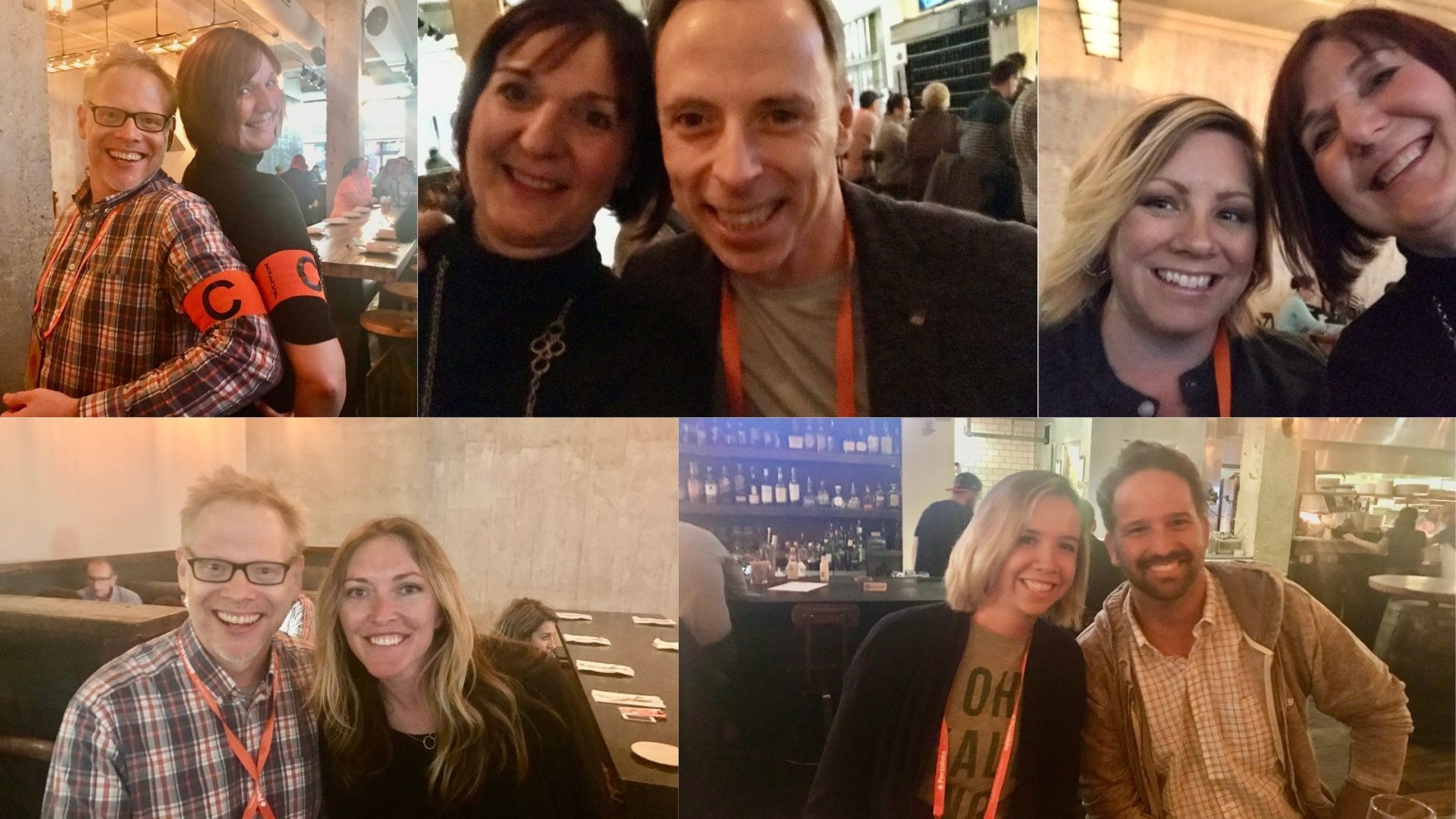
The whole thing cost $600. Less than the ticket I couldn’t afford. And it generated more business conversations, more introductions, and more lasting connections than any conference booth or sponsored session ever has for me.
Why a client appreciation event works when digital marketing doesn’t
Think about what happens when you get a Facebook ad versus a personal invitation in the mail. The ad gets scrolled past in 1.3 seconds. The invitation gets held, read, and put on the refrigerator. That’s not sentimental — it’s a fundamental difference in how humans process physical versus digital information.
Forbes and Cambridge Network researchers have been studying what they’re calling “the last trusted space” phenomenon: face-to-face events are now the environment where trust forms fastest, because everything digital is suspect. People scroll with habitual skepticism now. They assume the photo is edited, the testimonial is generated, the “limited offer” is fake. But a room full of real people? That still works the way it always has.
The referral math reinforces this. Referral marketing produces customers who close faster, spend more, and stay longer. A client who attends your event and brings a friend isn’t a lead — they’re a warm introduction with social proof already attached. The friend already trusts you before they’ve said a word to you, because someone they trust does.
What a client appreciation event for small business looks like in practice
Forget the vision of a catered reception with a printed program and name badges. That’s a corporate event. A small business client event looks like this: 6–12 people, 90 minutes, a space with a door that closes, good coffee or wine, and a clear reason you’ve called them together.
The back room of a coffee shop works. A reserved table at a casual restaurant works. Your office works. The point isn’t the room — it’s the intentionality. You invited these specific people on purpose, which tells each of them they matter to you specifically. That message travels far.
Here’s what the format looks like in practice:
- Guest count: 6–10 clients is the sweet spot. Fewer than 6 and it feels like a meeting. More than 12 and you lose the intimacy that makes it work.
- Duration: 90 minutes maximum. Respect their time and they’ll leave wanting more — which is exactly the feeling you want attached to your name.
- Setting: Somewhere with ambient noise but not a loud bar. The back room of a local restaurant, a private dining room, or a reserved corner at a coffee shop all work well.
- Format: Informal dinner or drinks. No PowerPoint. No sales pitch. A brief moment where you thank them and share one useful insight — then let the conversation go where it wants to go.
- The invite: Handwritten note or a phone call. Not email. Not Evite. The format of the invitation signals what kind of event this is.
How much does a client appreciation event cost?
This is where people talk themselves out of it. They imagine an expensive venue and an open bar and a gift for every guest and a photographer. None of that is necessary. Here’s what a real small business client event costs:
| Event Format | Estimated Cost | Best For |
|---|---|---|
| Coffee meetup (back room rental) | $40–$80 for coffee + pastries | Morning networking, consultants, service businesses |
| Casual dinner (reserved table) | $100–$200 (you cover the first round) | Evening events, closer client relationships |
| Hosted gathering (your space) | $50–$120 (wine, cheese, light snacks) | Established businesses with office or studio space |
| Workshop + refreshments | $80–$150 total | Coaches, consultants, educators — anyone with a teachable skill |
Compare that to what you’d spend on a month of Facebook ads to reach strangers who’ve never heard of you. A $150 event with 8 existing clients — people who already trust your work — will almost always outperform $150 in cold digital advertising for one simple reason: warm relationships convert at 10–20 times the rate of cold traffic. ANA’s independent research on analog marketing ROI consistently shows face-to-face and physical channels outperforming digital for acquisition cost.
Who should you invite to a small business client event?
The list matters more than anything else about the event. Start with your top 20% — the clients who pay on time, refer others without being asked, and are genuinely enthusiastic about what you do. These are your anchor guests. They set the energy in the room.
Add two or three people who are on the edge of that group: clients you’d like to deepen, people who’ve referred you once and will refer again, or a strategic partner whose work complements yours. Don’t fill the room with near-strangers or people you’re hoping to convert. This isn’t a lead generation event. It’s a relationship event — which, done right, generates more leads than a lead generation event ever would.
A useful test: would you be comfortable having a real conversation with this person for 90 minutes? If yes, they belong on the list. If the answer is “I’d be working to keep it going,” they’re not ready for this format yet.
How to get referrals from a client appreciation event — without asking
Here’s the counterintuitive part: the events that generate the most referrals are the ones where you never directly ask for referrals. Asking works, and you should know how to ask for referrals — but a client event creates conditions where referrals happen organically, before you need to prompt anyone.
The mechanism is simple. You’ve gathered a room full of people who trust you. You’ve given them a good experience. Now they’re talking to each other. When one of them mentions a problem and another says “you should talk to Ivana about that,” the referral has already happened. You didn’t have to prompt it. The room did the work.
To create those conditions intentionally:
- Give everyone a reason to talk about you. Share one genuinely useful insight during the event — something they can take home and use. It doesn’t have to be long. Five minutes of real value is better than thirty minutes of performing.
- Make introductions. When you seat people, think about who should meet each other. A quick “Sarah, you should talk to Marcus — you’re both dealing with the same hiring challenge” creates a connection and signals that you know your clients’ businesses well.
- Follow up within 24 hours. A handwritten note or a short personal email to each guest. Mention something specific from your conversation. This is when referrals happen — in the days after the event, when your name is still top of mind.
This is also why these events connect so naturally to referral and loyalty programs. The event plants the seed. The follow-up system harvests it.
What to say at your client appreciation event
The script anxiety is real. People imagine themselves standing up in front of a room and giving a presentation and they immediately decide they can’t do this. But a client event isn’t a presentation. It’s a gathering. The “speech” is two minutes, maximum, at the beginning.
Here’s a template that works for almost any format:
“I wanted to get together because you’re the people who’ve trusted me with real work — and I don’t say that lightly. I wanted to thank you in person, introduce you to each other, and share one thing I’ve been seeing in my work that I think is relevant to everyone in this room. Then let’s talk.”
That’s it. You’re not pitching. You’re not presenting. You’re gathering people who trust you, treating them well, and creating conditions for conversation. The business outcomes follow from that — not from a sales close at the end of the evening.
How client events fit into a broader marketing strategy
A client appreciation event isn’t a one-time tactic. It’s a system once you run it twice. The first one teaches you who shows up, who refers, and what conversations get started. The second one is better because you know who to invite and what to say.
Run them quarterly and you’ve built an in-person relationship rhythm that replaces most of what a costly CRM and nurture sequence is supposed to do. Your top clients hear from you four times a year in person. They’re thinking about you. They’re introducing you to people. They’re staying longer because the relationship is active, not dormant.
This is part of a larger shift: the businesses pulling ahead right now are the ones combining analog relationship-building with the digital channels that still work — email, referral systems, content marketing. eMarketer’s 2026 retail loyalty research found that community experiences and micro-moments are now the primary driver of repeat business — not discounts, not email sequences. If you’re interested in understanding customer loyalty at a systems level, that’s where these events slot in. They’re the high-trust layer that makes everything else work better.
It also connects directly to the referral marketing work you’re already doing — or should be. The event is a referral activation moment. A well-run networking group like BNI operates on the same principle at a larger scale: structured in-person relationship-building that generates consistent business. A client event is the private, curated version of the same mechanism.
How to follow up after a client appreciation event
This is where most small business owners lose the business they worked to build. The event was great. People were engaged. Conversations were real. And then… nothing. No follow-up. No next step. The momentum dissolves within a week.
Follow-up is the most important part of the event — and it takes less than 30 minutes if you do it the right way:
- Within 24 hours: Send a personal note to every guest. Handwritten is best; a short personal email works. Reference something specific from your conversation — not a form letter.
- Within one week: Follow up on any specific action item or conversation thread that came up at the event. If someone mentioned a problem, send a relevant resource. If someone said they’d make an introduction, follow up gently.
- Within 30 days: Check in with the people who seemed most engaged. Not a sales email — a genuine “how’s that project going?” message. This is where new business conversations begin.
The follow-up doesn’t need a CRM or an automation tool. A simple spreadsheet with names, dates, and notes works fine for events with under 20 guests. The point is to document what was discussed so your follow-up is specific and personal — not generic.
Frequently asked questions about client appreciation events for small business
How many people should I invite to a client appreciation event?
Six to ten guests is the sweet spot for a small business client event. Fewer than six people can feel like a meeting. More than twelve and you lose the ability to have real one-on-one conversations with each guest. Start with your top 20% of clients — the ones who pay on time, refer others, and are genuinely enthusiastic about your work.
How much does a small business client appreciation event cost?
A well-run client event for 8–10 people costs between $80 and $200 total. A back room at a coffee shop with coffee and pastries runs $40–$80. A casual dinner where you cover the first round of drinks runs $100–$200. You don’t need a venue rental, a catered spread, or a photographer. The investment is in the intentionality of the invite and the follow-up, not the production budget.
What’s the best way to invite clients to an appreciation event?
A handwritten note or a personal phone call outperforms email by a significant margin for this type of event. The format of the invitation signals the nature of the gathering. When someone receives a handwritten invite, they understand immediately that this is personal and intentional — not a mass marketing email dressed up as an invitation.
How do I get referrals from a client event without directly asking?
Create conditions for organic referrals by making introductions between guests, sharing one useful insight during the event that guests will repeat to others, and following up personally within 24 hours. When clients are talking to each other in your presence, referrals happen in the conversation — before you need to ask. That said, knowing how to ask for referrals is still a skill worth having for the right moments.
How often should I run client appreciation events?
Quarterly is the ideal cadence for small businesses with an active client base. Annual is the minimum if you want to maintain the relationship momentum. Running them quarterly turns a one-time tactic into a system — your clients hear from you in person four times a year, which keeps your name and your work in active conversation in their networks.
Additional reading
- Direct Mail Small Business ROI: Is It Worth It? — The channel data nobody in digital marketing wants to show you.
- How to Ask for Referrals (Without Feeling Awkward) — The follow-up conversation your client event makes possible.
- Referral and Loyalty Programs for Small Business — How to systemize the word-of-mouth your events generate.
- Customer Loyalty Strategy for Small Business — Where client events fit in the broader retention picture.